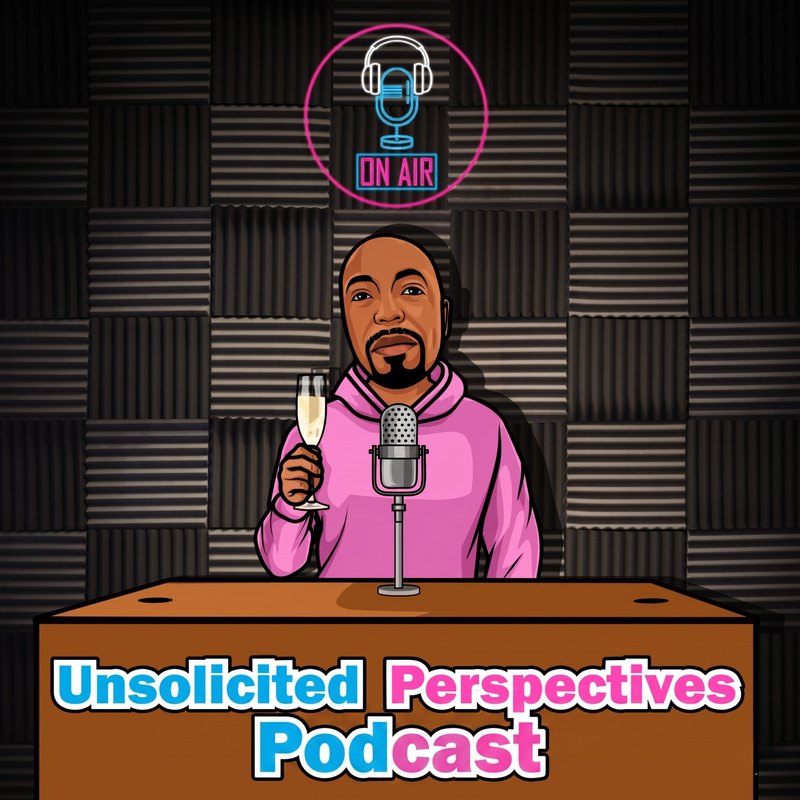
The DNA Didn't Match He's Still in Prison | Magic Johnson & Canva
Summary
What do we do when the truth is sitting right in front of us? On this Sibling Happy Hour, Bruce Anthony and his sister J. Aundrea take that question through four very different stories. Thirty-five years after Magic Johnson stood in front of the world with his HIV diagnosis, they ask whether the stigma ever really left or just got quieter. Canva lays off 1,271 people and somehow earns applause, which says a lot about how low the bar has gotten. Then the conversation turns heavy. A documentary about Darryl Hunt leads Bruce to a Cleveland man named Terry Ferrell, who is doing life while the evidence that convicted him keeps pointing somewhere else, and to the uncomfortable reasons a system would rather be right than correct. And because it is still the Happy Hour, a Reddit post about a boyfriend with bad hygiene splits the siblings right down the middle. Stigma, corporate responsibility, justice and one very necessary toothbrush debate.
#UnsolicitedPerspectives #SiblingHappyHour #MagicJohnson #HIVAwareness #Canva #Layoffs #WrongfulConviction #DarrylHunt #TerryFerrell #DNAEvidence #CriminalJustice #InnocenceProject #BlackPodcast #redditstories
Chapters:
00:00:00 Magic Johnson, Canva Layoffs, a Man Doing Life and a Stank Boyfriend
00:02:14 New Merch, New Catchphrases and Jay's Face on the New Show Logo
00:04:10 A Nationwide FAA Ground Stop and Aviation Chaos Not Seen Since 9/11
00:07:21 Bruce's Favorite Player and 35 Years Since Magic's HIV Announcement
00:10:45 HIV Got Pushed to the Back Burner and Young Folks Quit Wrapping Up
00:18:52 Canva Laid Off 1,271 People and Somehow Still Got a Standing Ovation
00:21:25 Layoffs Aren't Firings, So Why Do Companies Treat Them the Same?
00:24:40 Some Folks Live Behind the Check While Basic Decency Gets Applause
00:27:22 DNA Said Darryl Hunt Was Not the Man, but the System Said Stay Put
00:30:19 When DNA Excluded Darryl Hunt, Prosecutors Just Changed Their Story
00:31:45 After Ten Years Inside, Do You Take the Plea or Stand on Principle?
00:32:59 A DNA Match and a Confession Freed Darryl Hunt After 20 Long Years
00:34:36 Terry Ferrell: The Witness Lied, the DNA Missed, and No New Trial
00:35:47 Prosecutors Protect Egos Because Right Ain't the Same as Correct
00:40:25 The Star Witness Admitted He Lied and Ohio Still Said No New Trial
00:43:53 Why Wrongful Conviction Is Bruce's Greatest Fear as a Black Man
00:45:51 He Deserves a New Trial, and Bruce Just Needs a Private Bathroom
00:52:32 One Hygiene Compliment Spirals Into the Great Toothbrush Debate
00:56:30 Reddit: My Caring Boyfriend of Two Years Has Really Bad Hygiene
00:59:32 Bruce Hears Depression, Not Laziness, Behind All the Bad Hygiene
01:00:52 Jay's Verdict: Y'all Put Up With Too Damn Much for Too Long, Get Out
01:06:45 Four Stories, One Question: What Do We Do When the Truth Shows Up?
This isn't just content — it's a conversation. Subscribe, hit the bell, and drop a comment. What you think matters here.
Want the unfiltered version? The takes we don't soften, the extra conversations, the real behind-the-scenes?
🔓 YouTube Membership: https://www.youtube.com/channel/UCL4HuzYPchKvoajwR9MLxSQ/join
💸 Patreon: patreon.com/unsolicitedperspectives
Full episodes, clips, merch, and everything Unsolicited Perspectives in one place:
🌐 www.unsolicitedperspectives.com
See you in the next one.
#UnsolicitedPerspectives #BlackCulture #BlackPodcast #SocialCommentary #CurrentEvents #PopCulture #Podcast #BlackHistory #Entertainment #relationships
Beat Provided By https://freebeats.io | Produced By White Hot
Key takeaways
- Magic Johnson announced he was HIV positive on November 7, 1991, at age 32, when many people saw the diagnosis as a death sentence. Thirty-five years later he is still here.
- Bruce says the CDC hotline went from about 3,000 calls a day to 40,000 calls between 5 PM and midnight after the announcement.
- Bruce and Jay think better medication made people too relaxed about prevention, and Jay wants the public push for testing from the 1990s back.
- Canva laid off 1,271 people, about 22% of its workforce, and was applauded for offering at least six months of pay, up to 12 months of healthcare, career coaching and the chance to apply for $10,000 grants.
- Jay's point on layoffs: it is not a firing, and the company is responsible for people who lose their jobs through no fault of their own.
- Bruce credits Canva for going above and beyond but says the applause shows how low the bar is, and the pressure belongs on companies doing worse than the bare minimum.
- In the Darryl Hunt case, DNA testing in 1994 showed he was not the man who assaulted Deborah Sykes, yet he stayed in prison until a 2003 database match led to another man's confession.
- Terry Ferrell has spent more than 20 years in prison. Bruce says the DNA on the murder weapons does not match him and the jailhouse informant recanted, but he has not been granted a new trial.
- Bruce is clear he is not calling Ferrell innocent. He is asking that a jury hear the new evidence.
- Jay cites the Innocence Project: Black Americans make up over half of recorded exonerations while being 13 to 14% of the US population.
- On the Reddit dilemma, Bruce hears possible depression and suggests professional help, while Jay says people put up with too much for too long.
- Bruce's closing thought: awareness without action is just another form of procrastination.
Quotes
But maybe Magic's story isn't just about survival. Maybe it's a mirror.
Bruce Anthony
A company can handle layoffs responsibly, and thousands of people could still be left wondering what comes next.
Bruce Anthony
It's not a firing, it's a layoff. So doing right by people should be the way that things work.
Jay Aundrea
So some people are not living check to check. They living behind the check, and they borrowing against themselves.
Bruce Anthony
Canva over here doing above and beyond. You doing worse than the bare minimum.
Bruce Anthony
You can be right in prosecuting and convicting somebody, but that doesn't mean that you're correct.
Bruce Anthony
To admit that not only am I wrong, but it had devastating implications on so many lives and it's my fault, that's a hard thing to admit.
Jay Aundrea
I mean, but for the last 20 years, that's been the villain in her story
Jay Aundrea
I'm not asking to free him. I'm asking that the jury hear the new evidence.
Bruce Anthony
If you invest in schools and public education and actually create an environment where kids wanna learn, well, then you'll start to see prison rates drop.
Jay Aundrea
There's no such thing as being good about showering. There's just showering
Jay Aundrea
Y'all be willing to put up with too damn much for too damn long
Jay Aundrea
When the truth shows up, do you listen, or do you look for a reason not to?
Bruce Anthony
Awareness without action is just another form of procrastination.
Bruce Anthony
Two things at the same time can be true.
Bruce Anthony
Transcript
Read the full transcript
Sibling HH 11/17/26
Magic Johnson, Canva Layoffs, a Man Doing Life and a Stank Boyfriend
Bruce Anthony: [00:00:01] We’re talking about stigma, corporate responsibility, and a justice system that sometimes seem more concerned with protecting a conviction than finding the truth. We gonna get into it. Let’s get it
Bruce Anthony: [00:00:23] Welcome. First of all, welcome. This is Unsolicited Perspectives. I am your host, Bruce Anthony, here to lead the conversation in important events and topics that are shaping today’s society. Join the conversation and follow us wherever you get your audio podcasts. Subscribe to our YouTube channel for our video podcast, YouTube exclusive content, and our YouTube membership.
[00:00:42] Rate, review, like, comment, share. Share with your friends, share with your family. Hell, even share with your enemies. On today’s episode
[00:00:52] It’s the Sibling Happy Hour. I’m here with my sis, Jay Aundrea. We gonna be dilly-dadding a little bit, then we talking about Magic Johnson, Canva, a man doing life, and a boyfriend who won’t take care of himself. But that’s enough of the intro. Let’s get to the show.
Bruce Anthony: [00:01:14] What up, sis?
Jay Aundrea: [00:01:15] What up, brother?
Bruce Anthony: [00:01:16] I can’t call it. I can’t call it, but yet I can. Yet I can. I forgot. You know something that I forgot to do when announcing that we’ve updated the website is that we’ve up- Okay.
[00:01:30] One, I didn’t really announce that we updated the website. We
Jay Aundrea: [00:01:33] I was just saying.
Bruce Anthony: [00:01:37] That was something I never mentioned. Ladies and gentlemen, we updated the website, so everything that you want from the show is on unsolicitedperspectives.com, including our store, and that’s what I wanted to also announce. Our merch is live and for sale. We got sweatshirts, T-shirts, mugs, bags. We got new logos, got new designs, and yes, you can even get designs with our catchphrases
Jay Aundrea: [00:02:05] Yes. Which we have.
Bruce Anthony: [00:02:10] we had it until people that listen and watch the show regularly are like, “Hey, on the last
New Merch, New Catchphrases and Jay’s Face on the New Show Logo
Bruce Anthony: [00:02:15] episode you ain’t say your little catchphrase.” I said, “I got a damn catchphrase?”
Jay Aundrea: [00:02:18] Yeah, we don’t notice this
Bruce Anthony: [00:02:21] At all
Jay Aundrea: [00:02:22] yeah. But thank y’all for pointing it out ‘cause, uh, it could go on merch
Bruce Anthony: [00:02:26] So it’s, it’s simple. Just go on unsolicitedperspectives.com. Not perspectives, but perspectives.com.
Jay Aundrea: [00:02:32] Y’all know what the show’s called
Bruce Anthony: [00:02:34] Yeah, y’all know what the show’s called. Uh, click the little merch thing. And like I said, we updated everything. We updated the new logo for the show. I, I, I put my sister on the logo for the Sibling Happy Hour because she’s not a co-host, she’s a major part of the show.
[00:02:50] The reason why the show was postponed is because we couldn’t do the show for Friday, and I know damn well if I do a solo show, which y’all enjoy, y’all just enjoy them on Tuesdays. Y’all don’t wanna see it replaced by the Sibling Happy Hour. I done gotten feedback to just be like, “Yo, where the hell’s your sister?
[00:03:08] Like, you cool, but where is Jay?” I’m like, “Damn, good thing I’m real secure with myself.”
Jay Aundrea: [00:03:14] Good thing, good thing your self-esteem is tight,
Bruce Anthony: [00:03:18] Yeah. Well, that’s what they say. Uh, maybe a little too, too tight. Maybe I got too much self-esteem. But anyway, like ladies and gentlemen, go ahead and check that out. My sister got, my sister got her face on a, on a T-shirt. A good T-shirt, not, not, not, not one of the T-shirts that people normally get their face on.
Jay Aundrea: [00:03:37] Right
Bruce Anthony: [00:03:38] Not one of those. Although, if, if the, if they didn’t do a ground halt recently, uh, there was probably gonna be a lot of faces on the T-shirt, you know, uh, uh, because something was going on
Jay Aundrea: [00:03:54] Yes.
Bruce Anthony: [00:03:55] planes this past weekend, and all the flights were grounded. And so, uh, we, I… We’ll get more details on the next show ‘cause we gotta do a little research ‘cause we don’t actually know what’s going on.
[00:04:08] I don’t think the administration actually knows what’s going
A Nationwide FAA Ground Stop and Aviation Chaos Not Seen Since 9/11
Bruce Anthony: [00:04:10] on
Jay Aundrea: [00:04:11] so we’re talking about Friday, November 13th, uh, the Federal Aviation Administration, the FAA, ordered a nationwide ground stop, temporarily halting commercial flight departures throughout the United States. So the shutdown approximately lasted four hours and 20 minutes and was one of the most significant disruptions of US aviation since September 11th, y’all.
[00:04:35] The cause was a major telecommunications system failure, apparently triggered by routine maintenance involving outdated air traffic control infrastructure. So officials say there was no evidence of a cyberattack, but again, we’re gonna do more research on this and, and, and talk a little bit more in depth on it, because this has not happened, like, like, like I said, since, uh, September 11th, and it’s very interesting on what administration this unprecedented event occurred under
Bruce Anthony: [00:05:09] Yeah, you know, it, ever since he took office for the second time, it’s been some shit going on with
Jay Aundrea: [00:05:15] Yeah.
Bruce Anthony: [00:05:16] Like I would just, I would just say, right? Planes falling out the sky, helicopters crashing into rivers. Like it’s, it’s a lot going on.
Jay Aundrea: [00:05:28] have been happening,
Bruce Anthony: [00:05:29] now I, you know, I’ve been flying, so the last couple of years several times and ain’t nothing happened, so thank the Lord for that.
[00:05:37] But they, they keep trying to blame it on Biden. At a certain… This wasn’t happening under Biden. I’m just gonna… I didn’t see these things
Jay Aundrea: [00:05:45] I took plenty of flights under Biden just fine.
Bruce Anthony: [00:05:49] All, all
Jay Aundrea: [00:05:50] worries. All
Bruce Anthony: [00:05:51] international.
Jay Aundrea: [00:05:52] Yes, no worries. Now, I say a little prayer
Bruce Anthony: [00:05:58] Right. You got… Look, it’s like playing craps out here when you jump on a plane, you just never know. And the fact to be
[00:06:04] stranded, woo. Somebody, uh, I’ma, I’ma bury one airline right now ‘cause it’s a airline I really don’t like. I miss Spirit ‘cause I would choose Spirit over this next airline. Somebody was like, “Yeah, they canceled my American Airlines flight.”
[00:06:19] I was like, “That’s paranormal. That ain’t, that ain’t ‘cause of this catastrophic event. That’s just American Airlines
Jay Aundrea: [00:06:24] That was already, that, that cancellation was already on the docket.
Bruce Anthony: [00:06:30] told me one time I was flying American Airlines and they was like, “Yeah, people just didn’t show up.” I was like, “What the hell you mean people didn’t show up?”
[00:06:37] “Because it’s the first flight, you know, every now and then sometimes people don’t show up.” I’m like, “Don’t show up for work? This is a really important job. I need you to show up for work.”
Jay Aundrea: [00:06:46] Like the gate agent,
Bruce Anthony: the
Jay Aundrea: [00:06:48] the crew, the
[00:06:49] flight crew,
Bruce Anthony: [00:06:50] the, the pilot wasn’t even there.
Jay Aundrea: [00:06:52] Wow
Bruce Anthony: [00:06:54] And I was like, you know what? That’s cool ‘cause they was probably on some Denzel Washington flight type stuff last night, and they, and they let them go ahead and sleep that off while I get on this plane
Jay Aundrea: [00:07:04] Yeah. Yes, please
Bruce Anthony: [00:07:07] To kind of detour, that’s something that should be celebrated, but I, but of course the, the cynic in me has a, uh, has a overarching question about this.
Bruce’s Favorite Player and 35 Years Since Magic’s HIV Announcement
Bruce Anthony: [00:07:22] I grew up born in Illinois. Our grandfather, major, major Chicago, Chicago sports fan, and part of that because I love basketball, Chicago Bulls. Everybody automatically thinks because I have a Jordan collection, I’m a, I’m a Chicago Bulls fan, that I’m— that Michael Jordan is my favorite player of all time.
[00:07:42] Nope, he is not. It is Earvin “Magic” Johnson. He is my favorite player of all time.
Jay Aundrea: [00:07:51] And, and this is not a new thing. I mean, literally since we were kids,
Bruce Anthony: [00:07:56] Pff. S-
Jay Aundrea: [00:07:57] it’s always been all, it’s been about Magic Johnson
Bruce Anthony: [00:07:59] Has been about Magic Johnson all the time. So on November 7th, 1991, Magic Johnson walks up on stage and delivers news that stops the world cold. He’s only 32 at the time, which is crazy because I’m 46. Like, he was still a kid to me, when I look at 32-year-olds now. Uh, he’s still one of the most recognizable athletes on the planet at this particular time, and he announces that he is HIV positive and retiring from basketball.
[00:08:27] In that moment, many people thought that they knew how the story would end because at that time, HIV was a death sentence. But they were wrong. 35 years later, Magic is still here, still thriving, and recently he credited God, his family, and the people who kept him in their prayers for his survival and success.
[00:08:47] But maybe Magic’s story isn’t just about survival. Maybe it’s a mirror. Because while the medicine has evolved, it’s worse— it’s worth asking whether we have. Has the stigma around HIV truly gone away, or has it simply become less visible, especially in our communities and in our churches? And when we talk about Magic’s success, are we talking about the power of modern treatment alone?
[00:09:11] Or are we talking about the advantages that come with wealth, influence, and access to the best care money can buy? Now, this isn’t to diminish what Magic Johnson has overcome. I love Magic Johnson. I cried on that day. I was an 11-year-old boy in the sixth grade, had come home from school, watching SportsCenter, seeing this announcement, and cried because it was a death sentence then.
[00:09:38] He was g- we were like, “He’s gonna be gone in a week or two.” And he became an advocate. Sometimes not the best advocate, but an advocate nevertheless, uh, telling his story, how he con- how contracted it and, and, how he was living and dealing with it.
Jay Aundrea: [00:09:56] Mm-hmm.
Bruce Anthony: [00:09:58] The conversation around Magic Johnson immediately went to, “Oh, he was closeted, that he was really gay.”
[00:10:04] Because at that time, it, it— the original name for HIV was the gay cancer. That’s what they were calling it in the ’80s. And there were people in the Reagan administration who were not trying to really eradicate this disease because it was affecting people i-in populations that they didn’t really care about.
Jay Aundrea: [00:10:24] Correct
Bruce Anthony: [00:10:26] But then it started hitting home, and it started hitting little kids that had blood transfusions. I forget his name, but the little boy, it was an HBO documentary that got HIV and then the ignorance that came along with, uh, people shunning the little boy and people getting HIV, and then eventually the education that came along with it.
HIV Got Pushed to the Back Burner and Young Folks Quit Wrapping Up
Bruce Anthony: [00:10:45] But have we really grown? Because Magic made it kinda disappear in our thought processes, and I talk to young people, and they don’t grow up in the same environment that we did. When Magic Johnson got HIV, there were whole strap-it-up campaigns. Wear condoms. MTV, your favorite artists would talk about wear condoms, protect yourself.
[00:11:15] I talk to these young kids out here. The condom industry’s gotta be dying ‘cause these young kids ain’t wearing it at all. They act like HIV has disappeared, and it’s still here. Yes, you can get treatment. Yes, there’s even a pill that you could take to stop you from getting it, which should be on grocery store shelves right now for everybody to get it. But has that conversation changed? Like, have we evolved or have we just… Has it just been pushed to the back burner?
Jay Aundrea: [00:11:48] Are you asking?
Bruce Anthony: [00:11:49] No, I got you on the show just to look at me as I
Jay Aundrea: [00:11:53] No, I, I, no, I, I, you were on a roll and it was, I was actually very, you know, pulled into what you were saying, so I didn’t know if that was a rhetorical question for the
Bruce Anthony: [00:12:04] Okay. Yeah. I, I get it. No, it’s a question. It’s a question for you and the audience. It’s something to think about. You know I like to think about stuff. I don’t know
Jay Aundrea: [00:12:12] Yeah, I think that, you know, I think you’re exactly right that because of the advances in medication and because you see, people living with HIV, AIDS, and you see s- I don’t wanna say success stories, but you see stories like Magic Johnson and folks living and being advocates that you do, I think, lose a little bit of the seriousness of, of prevention.
Bruce Anthony: [00:12:47] Mm-hmm.
Jay Aundrea: [00:12:48] And I feel like we kinda need to go back to that time where you could see a conscious rap about wrapping it up, right? Or you will see TLC and Left Eye, it, her sunglasses is a condom over her left eye, you know. So like it… I pointed to my right eye. don’t…
Bruce Anthony: [00:13:10] Well, you know,
Jay Aundrea: [00:13:11] You know what?
Bruce Anthony: [00:13:12] just let it go.
Jay Aundrea: [00:13:14] just let it go. I think that yeah, I think that, uh, uh, it’s funny because I, I see billboards around town, right, about getting tested and things like that, but I don’t think that that public push that we had, in the ’90s, ‘cause it really was like late ’80s into the ’90s, mid-’90s that you really saw people, living with the, with the disease, talking and advocating and really speaking up and, and, and breaking down barriers.
[00:13:56] You see… I, I really feel like we need to go back to that time where we’re really pushing and advocating for testing and prevention, and that’s, that’s something I think that we’ve lost. I think you’re right
Bruce Anthony: [00:14:08] Yeah. Magic contracting the virus did make people more aware ‘cause before he contracted the virus, a lot of people thought, “Well, this isn’t gonna happen to me because look at who the people that it’s happening to.” It were people in the LGBTQ+ community and drug users, right? You had the little boy who contracted it for blood transfusion.
[00:14:33] I saw that you was typing. Were you looking that up? Can you
Jay Aundrea: [00:14:35] Yeah, but there were s- there’s been several docs on HBO
Bruce Anthony: [00:14:40] about that, I wish I could remember that little boy’s name. Somebody out there in the audience was corr- will correct me. And then it was Magic, and then Magic was open about it. He was like, “Yeah, I contracted it because I have sex with women a lot.”
[00:14:55] And but that was kind of the backlash. It was like, hey man, like don’t do this 60 Minutes or ABC interview where Barbara Walters talking about you having sex with six, seven, eight women. Like, that’s a bit ridiculous. Let’s not d- let’s not glamour- glamorize your lifestyle. But damn, also Showtime Lakers.
[00:15:18] Jesus. Like Jesus. Uh, Magic was wild. But what it led to was like people started getting tested. Like the very next day, uh, there was an HIV line that re- the CDC had a hotline, and it normally took about 3,000 calls a day. Between 5:00 PM and midnight, it took 40,000 calls, and HIV testing in Missouri doubled the next morning.
[00:15:43] Why specifically Missouri? I don’t know, but Missouri was like, “Look, if Magic can get it,
Jay Aundrea: [00:15:48] Yeah.
Bruce Anthony: [00:15:49] out here can get it.” Uh, so you know, Magic came back and, and he played in an All-Star game in the Olympics, but some of the basketball players, when he came back in the All-Star game, you know, one of the, one of the most notorious ones, Karl Malone, was like, “What am I supposed to do if he brush up against me and then I get contract the virus?
[00:16:07] You know, I don’t want that.” And that’s how ignorant we were at the time. But now we’re too lax about it, right? Now we’re like, “Oh, I can just take a pill and I don’t have to worry about getting it.” And it’s like, well, that’s the least of my problems. People are more worried about catching herpes than they are about HIV, ‘cause they are like, “Look, with HIV, eventually you take these drugs and it becomes undetectable.
[00:16:30] Herpes is with you forever.” And I’m like, that’s
[00:16:33] one of the dumbest thing. You can d- maybe you can die from herpes. I don’t know. You can definitely die from HIV, so like, I don’t think that that one is worse than the other, but go ahead with yourself, I guess.
Jay Aundrea: [00:16:46] So it’s, it was a HBO special called “Blood Brothers: The Joey DiPaolo Story,” and it
[00:16:52] was about 13-year-old boy who contracted HIV in 1984 through a blood transfusion during heart surgery. So
Bruce Anthony: [00:17:00] Yeah
Jay Aundrea: [00:17:01] DiPaolo
Bruce Anthony: [00:17:03] Yeah. A- and that was a sad story of how he’s just, he’s just a little 13-year-old kid. You watch that documentary and you see the ignorance. Uh, but we always have ignorance, uh, just because people are ignorant. Uh, same thing happened with COVID, right? People out here dying. It’s like, “It’s just the flu.”
[00:17:19] That ain’t the flu. That right there is something different. We need to get a lock on this
Jay Aundrea: [00:17:25] I’ve had the flu and I’ve had COVID. One put me in the hospital
Bruce Anthony: [00:17:29] Right. Look, COVID had me on my butt for 48 hours straight. But it just… Because of Magic, and not just because of Magic, but I would say because Magic put a spotlight on it, the treatment went from a few pills that would sustain your life maybe for a little while, to a daily pill that can prevent it.
[00:17:53] Which by the way, yes, ladies and gentlemen, there is a daily pill that you could ta- I see the advertisements all the time that you could take to prevent you from catching HIV, and why it’s not on the shelves and readily available for anybody to buy, I don’t know. I don’t know. But, uh, yeah, so I wanna shout out Magic Johnson for putting a spotlight on a disease that were killing folks, that was important.
[00:18:22] And, and, uh, uh, this is a weird take, but putting it on somebody that people cared about, that they would pay attention to, and that says more about society than it does about Magic Johnson. So shout out to Magic. 35 years, man. Boy. Whew. That was a long time ago. That’s a cool story Here’s a story that’s another one. Once again, the
Canva Laid Off 1,271 People and Somehow Still Got a Standing Ovation
Bruce Anthony: [00:18:52] cynic in me is just like, “What are we really talking about here?” So what am I talking about? Canva just laid off 1,271 people. That’s about 22% of its workforce. And normally, that’s a headline that would cause outrage. Instead, it sparked applause. Jay, do you know why it sparked applause?
Jay Aundrea: [00:19:16] I do not
Bruce Anthony: [00:19:17] The reason wasn’t the layoffs themselves, it was how the company handled them.
[00:19:21] Employees were offered months of pay, health coverage, career support, ownership of their work equipment, and in some cases, funding to help launch whatever comes next. And honestly, that says something because when a company gets praised for giving people time, resources, and a soft landing after losing their job, it raises a bigger question: Have our expectations become that low?
[00:19:44] Should we applaud Canva for treating people better than most companies do? Or should we be asking why basic respect during a layoff feels worthy of standing ovation in the first place? And beyond all of that, there’s an uncomfortable reality. Two things at the same time can be true. A company can handle layoffs responsibly, and thousands of people could still be left wondering what comes next.
[00:20:08] So this is dope that Canva laid off— That’s not dope that Canva laid off 22% of the workforce.
Jay Aundrea: [00:20:17] No
Bruce Anthony: [00:20:18] We’ve talked about it so much on this show. AI is gonna eliminate a lot of jobs, but AI is going to bring about a lot of jobs. For somebody, for a company like Canva, yeah, AI is gonna eliminate 22% of the jobs. It is.
Jay Aundrea: [00:20:35] Yeah
Bruce Anthony: [00:20:36] And this is dope that this company was like, “Look, we’re gonna lose money, but how much money would we lose if we paid employees for six months, let them keep their healthcare for a year, let them keep their work equipment, and if they got a good idea about starting something new, we’re gonna fund them a little bit to help them get going.”
[00:20:57] Yes, that’s beautiful. That’s beautiful. I also think that’s what companies should be doing when they lay off employees. Ask somebody, somebody who’s had companies that’s had to close. You do the best things you can for the people that’s working for you because this is like, “Yeah, I’m closing ‘cause things ain’t working out and I’m losing money financially.
[00:21:15] But I also realize you about to lose money financially. So let me see how much of a soft landing I could give to you.”
Jay Aundrea: [00:21:22] Yeah
Bruce Anthony: [00:21:23] That just seems like common courtesy
Layoffs Aren’t Firings, So Why Do Companies Treat Them the Same?
Jay Aundrea: [00:21:26] Yeah, I would absolutely agree with you. Sometimes I feel like corporations treat layoffs like it’s the employee’s fault, and it’s not. Layoffs or due to restructuring, mergers, acquisitions, it could be anything, but the company is responsible for these people. It’s not their fault that for whatever reason their position has been eliminated.
[00:21:52] This is not like a, it’s not a firing, it’s a layoff. So doing right by people should be the way that things work. It’s not. I feel like a lot of times, like I said, corporations treat layoffs like firings. I’m like, “No, you are, you are changing my life abruptly right now and through no fault of my own.” So providing career coaching and a, a decent severance package that actually gives me time to find another position, offering to keep me on healthcare plans and things like that, yeah, that, thank you.
Bruce Anthony: [00:22:38] and don’t get me wrong. Look, this is a very handsome package. At least six months salary regardless of location, up to 12 months of healthcare, career coaching, a year of LinkedIn Premium, and for departing, and departing staff keep their MacBooks. And I can tell you, right there
Jay Aundrea: This
Bruce Anthony: [00:22:56] I would say thank you.
[00:22:58] Thank you, I keep the— get to keep my MacBook because you know how much I… Look, Apple don’t pay me nothing, and even Apple, even Apple products are on our intros and promos and commercials for the show.
Jay Aundrea: [00:23:12] That
Bruce Anthony: [00:23:13] I got my little, my little Apple laptop in the cartoon creation of the intro of the show. I love Apple.
[00:23:19] It’s a cult, but I love Apple, so
Jay Aundrea: [00:23:21] a cult, yeah. But I, it, it’s a cult I’m gonna stay in, y’all. Sorry
Bruce Anthony: [00:23:26] Yeah, right. Uh, the grants. Laid-off staff can apply for $10,000 grants to start something new. They can apply for it. Uh, this isn’t a guarantee, but Canva takes no equity in it. So th- I mean, it is— this is cool. D- don’t get me wrong. They, they did a little above and beyond what I would think is just what you should do. They went a little bit further than that. But also, once again, it’s a different concept when you look at how layoffs and firings typically take place. Sometimes people just show up to their job. There are factories that just shut down.
[00:24:04] People show up to work like it’s a normal day and e- and the doors are locked, and it’s like, “Yeah, everybody’s been laid off.”
Jay Aundrea: [00:24:10] Uh, we, it’s not that long ago that that’s what happened to the employees of Spirit
Bruce Anthony: [00:24:15] Right. Like they just showed up to work and they have no job no more. That, that, goodness gracious, my, my hood came up right there. They ain’t got no job no more. Using double and triple negatives in a sentence, but that’s
[00:24:30] real. Sometimes
Jay Aundrea: [00:24:31] it all balances out
Bruce Anthony: [00:24:32] it all balances out, right? E- especially when you talk about you coming into work and you ain’t got no work, right?
Some Folks Live Behind the Check While Basic Decency Gets Applause
Bruce Anthony: [00:24:40] ‘Cause people live in check to check sometimes. I tell people all the time, people live check to check. Sometimes people live behind the check. What does that mean? It means that they getting a check on Friday, but that check is to pay for all the stuff that was two weeks prior, not to pay for the stuff that’s two weeks ahead or what’s present.
[00:25:02] So some people are not living check to check. They living behind the check, and they borrowing against themselves. They racking up— The, the credit card debt right now in this country is crazy.
Jay Aundrea: [00:25:12] Oh yeah, I believe it
Bruce Anthony: [00:25:14] Crazy. And so, yes, I do want to applaud Canva for doing the right thing and go a little above and beyond what I think the right thing is. But this standing ovation, this, this widespread a- applause for common decency that I’m seeing all across social media, like calm down. This— We shouldn’t do that. We should be like, “Yo, good job.” But also to those other companies who are not doing it, instead of applauding Canva, let’s turn our ire on those companies and be like, “You should be doing better.”
[00:25:50] Canva over here doing above and beyond. You doing worse than the bare minimum.
Jay Aundrea: You’re right.
Bruce Anthony: [00:25:55] step up
Jay Aundrea: [00:25:57] I 100% agree
Bruce Anthony: [00:25:59] Ladies and gentlemen, this show is gonna feel like I’m attacking everybody, and I guess it kinda is. It kinda is ‘cause next I’m about to fire up the criminal justice system. And we’re gonna get into that next.
Bruce Anthony: [00:26:22] Jay, last weekend I watched “The Trials of D- Darryl Hunt.” Have you ever seen that documentary?
Jay Aundrea: [00:26:28] No, I did not
Bruce Anthony: [00:26:29] It’s, it’s an old documentary. I think it’s an old HBO documentary. You know, you got all these streaming stations, they always got something old, and I watched it. And, uh, one part of that story has been sitting with me ever since.
[00:26:40] It’s, it’s a story of a man that was on trial for, uh, that was arrested for something that he didn’t commit and his long struggle of trying to prove his innocence, right?
[00:26:54] It wasn’t… But what stuck with me wasn’t the arrest, it wasn’t the trial, it wasn’t even the conviction. The part I can’t get past happened years after his conviction.
[00:27:04] In 1994, ‘cause he was convicted in 1984, DNA testing showed that Darryl Hunt was not the man who assaulted Deborah Sykes. So Deborah Hykes- Sykes was assaulted and stabbed to death. DNA proved that he wasn’t the man to do it. For most of us, that sounds like a
DNA Said Darryl Hunt Was Not the Man, but the System Said Stay Put
Bruce Anthony: [00:27:22] moment justice finally correcting itself, right?
[00:27:25] Like, like it proved he didn’t do it.
Jay Aundrea: [00:27:27] Right
Bruce Anthony: [00:27:28] That’s not what happened. Darryl Hunt stayed in prison for another 10 years, right? So he was arrested in 1984. DNA evidence proves that he was not the man that, that assaulted her 10 years later, right? And then 10 years after that, he’s still in prison, so 20 years. And that’s why as I look at the case unfolding in Cleveland, I can’t help but wonder how much has really changed, and I’m gonna get into that case with Cleveland with more depth.
[00:28:00] But just a quick summary. Terry Ferrell has spent more than 20 years, 20 years behind bars for a murder of two elderly sisters. The DNA recovered from the murder weapons doesn’t match him. The jailhouse informant whose testimony helped convict him has since admitted he made the story all up, and still the courts have declined to grant him a new trial. If you listen to my conversation with Valena Beety, you already know this discussion isn’t about whether Terry Ferrell is a saint or sinner. It’s about something far more uncomfortable. What happens when evidence that once put someone in prison starts pointing in the opposite direction, and the system still refuses to reconsider? If science isn’t enough and the state’s own witness isn’t enough, what exactly does justice require before it agrees to take a second look? So I’m just gonna run down some of the key facts so people understand the similarities between the two trials. So let’s start with Darryl Hunt. That was a documentary that I watched.
[00:29:07] In August 1984, Deborah Sykes, a 25-year-old, so young, so young, 25-year-old copy editor, was assaulted and stabbed to death wor- walking home from work in Winston-Salem. Ladies and gentlemen, this is 1984. This is the South, but it’s Winston-Salem which is a college town. Uh, I forgot Winston-Salem was in— Wake Forest is in Winston-Salem, right? His first
[00:29:34] conviction was… Yeah, yeah, yeah. Uh, Hunt was nineteen years old. Hunt was Black, is Black. Deborah Sykes was white. The case was racially charged in Winston-Salem from day one. His first conviction was thrown out because prosecutors used a girlfriend’s statement even after she recanted them He was retried and convicted again in 1991. When I say the conviction was thrown out, he was still in prison. He was released for a little bit, and then they gave him a, a new trial, and then he was convicted again in 1991, right? He got a life— He got life instead of the death penalty because a single juror refused to make it a death vote
When DNA Excluded Darryl Hunt, Prosecutors Just Changed Their Story
Bruce Anthony: [00:30:19] unanimous.
[00:30:20] In 1994, DNA excluded him as the person that assaulted her. The stud- the judge still denied a new trial. The reasoning was that the test didn’t rule him out of the murder. Okay. The state’s new story was that another man had assaulted her and Darryl killed her. So they switched up the story. First, he was the one that assaulted her and killed her.
[00:30:43] DNA pr- evidence proves that he didn’t assault her. Then they say, “Well, nah, somebody else assaulted her, but he still killed her.” But they ain’t got no evidence that proves that he killed her
Jay Aundrea: [00:30:54] makes no sense
Bruce Anthony: [00:30:56] Makes no sense, right? But because he had already been convicted
Jay Aundrea: [00:31:01] Mm-hmm.
Bruce Anthony: [00:31:03] reversing a decision becomes extremely, extremely difficult. His lawyer, Mark Rebell, called it a total rejection of science. This is, this, this is 1994, right? We know DNA evidence is for real, for real.
Jay Aundrea: [00:31:21] Yes
Bruce Anthony: [00:31:24] This is still a Black man that’s convicted of assaulting and killing a white woman. They not letting his Black ass out of prison, right? He could have taken a plea deal sent him home, but because it would’ve meant that he would’ve had to admit guilt, he was like, “I’m not, I’m not gonna do that.” And standing on principle is a thing.
After Ten Years Inside, Do You Take the Plea or Stand on Principle?
Bruce Anthony: [00:31:45] Now, before I get into more detail, would you have stood on principle or would you be like, “I’m going home ‘cause I already spent 10 years in prison.
[00:31:52] I’m gonna go home”?
Jay Aundrea: [00:31:55] Man, that’s a really good question. Like, I would like to say that I would stand on principle. I would like to say that. I mean, I— But honestly, I don’t know, ‘cause 10 years is a long time. That’s his entire youth, right? ‘Cause he was 19 at the time. I don’t know. Yeah, I don’t know
Bruce Anthony: [00:32:19] I, y’all know… Hey, everybody out there know I’m very principled. Very principled. Can’t buy me for nothing. However, I’ve been in prison for 10 years, been having to go to the bathroom in front of all these people, gotta live in this unsanitary environment, eating bad food. I’m gonna go ahead and cop that plea deal ‘cause I just wanna get out.
[00:32:42] And then when I get out, even though I admitted guilt, I’m gonna go on a whirlwind tour saying, “I lied just to get out.” Because let me tell you something, I ain’t do this, but I ain’t wanna be in prison no more. He stood, he stood on principle.
Jay Aundrea: Yeah
Bruce Anthony: [00:32:59] a
A DNA Match and a Confession Freed Darryl Hunt After 20 Long Years
Bruce Anthony: [00:33:00] retrial. Lost a retrial. What finally freed him was a 2003 database that ran and matched the DNA that was actually found to a Wilford Brown, who eventually confessed and said, uh, Darryl had nothing to do with it, and he was finally released 20 years later.
[00:33:22] 20 years later. North Carolina executed 29 people between his conviction and his exoneration, and you should see he— they had different prosecutors that, that just were determined he wasn’t getting out. And even after the man matched Wilford Brown, matched the DNA, watching this documentary about Darryl Hunt,
Jay Aundrea: Mm-hmm.
Bruce Anthony: [00:33:45] matched the DNA, admitted to it, and they’re in the court, they’re about to release him, Deborah Sykes’ mama came up there.
[00:33:54] Now, 20 years she’s been dealing with this, the loss of her daughter, and her daughter died in a tragic, horrific way.
Jay Aundrea: [00:34:01] Yeah
Bruce Anthony: [00:34:02] She was still like, “I still think you did it, I’m not gonna forgive you.” I was like, “Ma’am, come on now. Like, like, what is it gonna take to convince you?”
Jay Aundrea: [00:34:12] I mean, but for the last 20 years, that’s been the villain in her story
Bruce Anthony: [00:34:17] Yeah. Yeah. But I mean, even, even the villain, even Thanos, you’d be like, “You know what, Thanos? I understand
Jay Aundrea: [00:34:26] N- no.
[00:34:28] No. No. That was half of everybody that he
[00:34:34] just
[00:34:35] blipped out of it.
Terry Ferrell: The Witness Lied, the DNA Missed, and No New Trial
Bruce Anthony: [00:34:36] go. Anyway, anyway, so I watched that documentary, and then I read, not in the paper, but I read somewhere about Terry, Terry Ferrell. So Terry Ferrell, uh, the case about him is that the victims were two sisters, Mary Bassenberger, who was eighty-nine, and Loretta Follett, who was seventy-seven, who lived next door to Ferrell in Cleveland.
[00:35:04] They were found dead nine- in 1992. Ferrell was twenty-one at the time and was jailed within days and questioned and released. No physical effort, evidence tied him or anyone to the crime, and the case went cold. Ten years later, a jailhouse informant who cut a deal became the star witness, and he was convicted.
[00:35:23] Terry, Terry Ferrell was convicted in 2003 and sentenced to life without parole. DNA testing took eight years because of crime lab delays and objections from prosecution When I had this conversation with Valena Beety I talked to her as somebody who was a former prosecutor who went over to the Innocence Project.
Prosecutors Protect Egos Because Right Ain’t the Same as Correct
Bruce Anthony: [00:35:47] Like, like why? Why would a prosecutor deny DNA testing? ‘Cause you know the motto of the show, “I don’t wanna be right, I wanna be correct.” You can be right in prosecuting and convicting somebody, but that doesn’t mean that you’re correct.
[00:36:04] You got the evidence to prove your conviction, but that doesn’t mean that you are correct. I would want to get the DNA testing because I wouldn’t want it on my conscience that an innocent man might be spending life without parole behind bars. So I can’t register it,
Jay Aundrea: [00:36:21] Yeah, your job is the pursuit of truth, uh, ideally, but… Uh, plea- uh, please tell me what her response to that
Bruce Anthony: [00:36:31] What she was just like Admitting when that you’re wrong is tough for people to do regardless
Jay Aundrea: [00:36:38] That’s exactly what I wrote down on my paper
Bruce Anthony: [00:36:40] Yeah, admitting that, admitting that you’re wrong. And, and I, I tell a person all the time, I get in— they drag me in stupid debates all the time, and I was like, “You know that you’re wrong on this. You just don’t wanna admit that you’re wrong, and you keep moving the conversation so that you end up being right.”
Jay Aundrea: [00:36:57] Mm-hmm.
Bruce Anthony: [00:36:58] I’m like, “I’m, I’m pointing this out to you in real time.” Well, nobody wants to admit that they’re wrong. “So you openly admit that you’re moving the con-” “Well, no, I’m not.” “Yes, you are, because you don’t want to be wrong.”
Jay Aundrea: [00:37:08] Mm-hmm
Bruce Anthony: [00:37:09] then there’s just the ego. She said the ego of it, right? Like you are defenders of the law.
[00:37:17] That’s what prosecutors believe, and that you have to believe that what you’re doing is right and righteous. And, uh, that’s, that— people, a lot of people fall victim to that. We go to wars over people convincing themselves that what they’re doing is righteous. No matter how horrible it is, what you’re doing is righteous.
[00:37:40] So a lot of prosecutors fall victim to that. I, that wouldn’t be me because my conscience would be too heavy. I don’t want nothing bad to happen to good people
Jay Aundrea: [00:37:50] Well, I think that’s also part of it, right? You, you have a decision to make when your conscience is bothering you. You can, you can fix it or you can make it worse, right? And so when you think about this idea of having to admit you’re wrong, it’s not just saying, “Okay, my opinion was wrong.” You did a job that you thought was right and righteous, and what it actually did was take 10, 20 years away from an innocent person.
[00:38:21] And so to admit that, that I had a hand in destroying someone’s life because what I did might have been right, but it wasn’t correct, that’s a har- that’s a hard… It’s hard to admit you’re wrong in general,
Bruce Anthony: [00:38:40] Mm-hmm.
Jay Aundrea: [00:38:41] but to admit that not only am I wrong, but it had devastating implications on so many lives and it’s my fault, that’s a hard thing to admit.
[00:38:52] So you will try to do whatever you have to do to not have to say that
[00:39:00] and try to compensate the person, you know, try to spend your time compensating that person for, you know, you’ll never compensate them for that lost time
Bruce Anthony: [00:39:12] Yeah, I think personally I wouldn’t forgive myself for something like that. Especially for something that, uh, uh, she said to me that a lot of prosecutors and cops were like, “We got… This is the person. This person is good for it.” And we watch it all the time on these “Law & Order” and these cop shows. They’re like, “This person is good for it.”
[00:39:33] And then a lot of times prosecutors will say, “Look, I know that they did other things. We gonna get them for something.
Jay Aundrea: Mm-hmm.
Bruce Anthony: [00:39:40] We leaving with something.”
Jay Aundrea: [00:39:42] Yeah
Bruce Anthony: [00:39:43] and, and like I can kinda understand that as well. Like if you know that you got a bunch of cases on this person that you can’t connect them to, you know you c- there’s not enough evidence, you can’t convict them on it, but you know that you can on this case
Jay Aundrea: [00:39:56] I mean, it was, uh… What was it? They ultimately got Capone on tax evasion or something like that
Bruce Anthony: [00:40:03] Yeah, they got him on tax evasion. Couldn’t catch him on nothing else, right? Like, uh, so they— But he actually was ta- tax evading, right? Like that, he actually did it. But sometimes they’ll be like, “Man, maybe he didn’t do this, but he did other things,” or, “She did other things. I’m gonna get her on something.”
Jay Aundrea: [00:40:20] Mm-hmm.
Bruce Anthony: [00:40:22] So that’s the reason why a lot of these people, like do these things.
[00:40:25] But
The Star Witness Admitted He Lied and Ohio Still Said No New Trial
Bruce Anthony: [00:40:26] going back to Terry Ferrell. So they try to reject the DNA test, and eventually it— What was the new evidence? The informant recanted. So finally the re- informant was like, “Look, I, I can’t have this on my heart. This man done been in jail for 10 years. I lied.” Right? “I lied.” Uh, detectives had other suspects that then, that never came up in the trial because detectives would be like, “Yeah, there are other su- suspects.”
[00:40:53] And prosecutors would be like, “Yep, this is our guy.”
[00:40:55] Right? “This is our guy.” and then the DNA on the murder weapons belong to neither Ferrell nor to any of the victims. So were they actually the murder weapons? Right? Like,
Jay Aundrea: [00:41:07] w-
Bruce Anthony: [00:41:08] like, like wait, what? The DNA didn’t… Like, so were they actively actually the murder weapons?
[00:41:14] So yeah, and, and this person is not getting a new trial despite the fact that they have new evidence, and part of it is because of Ohio, right? Credible evidence of innocence alone is not grounds for a new trial, which sounds ignorant to me in and of itself
Jay Aundrea: [00:41:35] It feels like the entire basis for granting a new trial would be evidence So the fact that that’s not the case is literally insane. Like, I don’t know how else, how much clearer I could
Bruce Anthony: [00:42:06] You’re right. You’re
Jay Aundrea: [00:42:07] Like, that, that literally sounds insane to me, but okay
Bruce Anthony: [00:42:14] Like, “Hey man, I didn’t eat, I didn’t eat this apple.
Jay Aundrea: [00:42:19] Mm-hmm.
Bruce Anthony: [00:42:20] I didn’t eat the apple.”
Jay Aundrea: [00:42:21] Yeah
Bruce Anthony: [00:42:22] You’re convicted of eating the apple. Later on you find out, “Well, I never ate apples before. That was my defense. But in actuality, I was forced to eat an apple in prison and found out I’m allergic to them. So here’s new evidence that I couldn’t have eaten the apple ‘cause something bad would’ve happened to me ‘cause I had to go to the hospital.”
[00:42:41] Nope. You’re still convicted of eating the apple. What? But it would kill me if I ate the apple. This is new evidence. What are you talking
Jay Aundrea: [00:42:49] can we have an opportunity to talk about this? Actually, no
Bruce Anthony: [00:42:54] So only death row prisoners are guaranteed a lawyer for this fight, right? So you’re not even gonna get that. So and before 2010, prosecut- prosecutors only had to read files to the defense in a closed room with no record of what was shared, and more than 1,000 people were convicted in a county in Ohio under that system are still in prison.
[00:43:20] So it was all this closed door type thing, and Ohio got a lot of prisoners that just probably didn’t even commit the crime. And the reason why this all struck with me is because this is one of my greatest fears, if not the greatest fear. I mean, yeah, I’m afraid of spiders and snakes and all that type of stuff, and I don’t wanna wake up in bed with no spider and no snake crawling on me.
Jay Aundrea: [00:43:42] I mean, nobody does
Bruce Anthony: [00:43:43] Nobody does, unless you like spiders and snakes, which is I think you’re a unique individual that I don’t really particularly wanna get to know. But, but
Jay Aundrea: [00:43:52] Mm-hmm.
Bruce Anthony: [00:43:53] one of my
Why Wrongful Conviction Is Bruce’s Greatest Fear as a Black Man
Bruce Anthony: [00:43:54] greatest fears is being wrong- wrongly convicted, and it’s a legitimate fear because I’m a historian, and Black men, especially young Black men, luckily I’m not young no more in this regard,
Jay Aundrea: [00:44:08] Mm-hmm.
Bruce Anthony: [00:44:09] get wrongfully convicted
Jay Aundrea: [00:44:12] Yeah. I was just about to say that ‘cause you were like, “I’m a historian,” and I’m like, “You’re also a Black man in America.”
Bruce Anthony: [00:44:19] Right, Black. The percentage, and I don’t have it right in front of me, but it’s— What I’m doing is paraphrasing. The percentage of overturned convictions is overwhelmingly high for Black men, which tells you Black men are being convicted crimes that they didn’t commit higher than any other group.
[00:44:46] Matter of fact, what was funny and what I forgot to mention in the Darryl Hunt case, in 1984 in Winston-Salem, he was convicted by an all-white jury. Now most people be like, “That happened in the ’60s.” Nope. It happened in my lifetime. I was a sentient being in 1984. You was born in 1984. Like that was in our lifetime.
[00:45:10] He was convicted by an all-white jury, and later it was discovered he ain’t had nothing, nada to do with it, and he spent 20 years in his life, and he only got as restitution about $350,000.
Jay Aundrea: [00:45:25] So according to the Innocence Project, Black Americans are disproportionately represented in wrongful convictions and exonerations in the United States, accounting for over half of all recorded exonerations despite making up 13 to 14% of the US population. So 52 to 53% of all exonerees recorded in the National Registry of Exonerations since 1989 are Black
He Deserves a New Trial, and Bruce Just Needs a Private Bathroom
Bruce Anthony: [00:45:51] Now, I said all that to say that, uh, Terry Ferrell deserves a new trial. I did not say that he was innocent because Ferrell jury heard more than one informant. Witnesses said that he tried to sell them a violin, and the violin was stolen from the house. So, uh, a 2004 appeal ruling mentions fresh blood on the victim’s doorframe.
[00:46:20] Ferrell said it came from a fight with his brother outside earlier in the day. So I’m not saying he didn’t do it.
Jay Aundrea: [00:46:26] Right
Bruce Anthony: [00:46:27] What I am saying is you got some new evidence. He deserves a new trial. That’s all I’m saying. And if you were in this situation, you’d be like, “Damn it, I want a new trial.”
Jay Aundrea: [00:46:40] Yeah
Bruce Anthony: [00:46:41] Even if I mighta had done it, ‘cause I’m not saying he didn’t do it.
[00:46:44] I’m not saying he’s innocent. What I am saying is that he deserves a new trial.
[00:46:49] That’s all I’m saying. Darryl Hunt was innocent, and as you said with that stat, a lot of people out there are innocent, but they spending decades in jail having to go to the bathroom in front of everybody
Jay Aundrea: [00:47:04] That’s— I think it’s more about the loss of freedom, but if that’s what stands out to you, I’ll go
Bruce Anthony: [00:47:10] W- well, I mean, the loss of freedom. Uh, uh, let’s put it this way, okay? I’m, I’m gonna put it to you like this.
Jay Aundrea: [00:47:17] Okay
Bruce Anthony: [00:47:18] I could live in my apartment, but I was forced to live in my apartment, couldn’t leave,
Jay Aundrea: [00:47:25] Mm-hmm.
Bruce Anthony: [00:47:26] but I still had my TV, my video games, and would still get food that I had to prepare myself, but I could still get food, and maybe the food is chosen for me, but I still get to prepare it myself, and I had to spend 20 years of my life like that, I’d be all right
Jay Aundrea: [00:47:44] Yeah, you wanna know why? ‘Cause that’s how you spent the last 20 years of your life
Bruce Anthony: [00:47:49] Not 20. The last four for sure.
Jay Aundrea: [00:47:53] At least since COVID. I’m sorry
Bruce Anthony: Man,
Jay Aundrea: [00:47:58] ve- it’s, it’s inching up on a decade
Bruce Anthony: [00:48:02] man. Boy, I love
[00:48:04] being inside.
Jay Aundrea: [00:48:06] man.
Bruce Anthony: [00:48:09] But you know what, though? I can use the bathroom in peace. That’s the
Jay Aundrea: [00:48:14] Yeah. You know, a lot of people could go to prison if they could set the ideal settings for themselves. Oh yeah, I would be in an apartment alone with food I prepare and all my things.
[00:48:26] Sure, I could be in prison then.
Bruce Anthony: [00:48:28] All right, it don’t even have to
[00:48:29] be… It could be a studio. It could be a cell. It could be a cell, a private ce- private cell.
Jay Aundrea: [00:48:36] cell. Yeah. Okay.
Bruce Anthony: [00:48:38] All right, okay, how about this? A pr- uh, not a private cell. I got a bunk mate, okay? But there’s a bathroom. Like, it’s a open space where we sleep, but there’s a private bathroom.
Jay Aundrea: [00:48:51] You will in the night turn over and see your cellmate dropping a deuce. That’s
[00:48:59] life.
Bruce Anthony: [00:49:00] I don’t want
Jay Aundrea: [00:49:01] That’s gonna be… That’s, you can’t change that. A lot of people could go to prison if the settings are ideal.
Bruce Anthony: [00:49:10] ideal for me. That’s still torture, but the private bathroom, all I need.
Jay Aundrea: [00:49:15] You do not get a private bathroom. It’s just not gonna happen
Bruce Anthony: [00:49:20] Oh, okay. Well, anyway, one of my greatest fears and what I’m trying to tell people out there, this stuff is still happening today routinely. People are being turned down and, and crime labs being behind, not being able to test DNA evidence while people spend their— People are in fear of their life every day in prison.
Jay Aundrea: [00:49:44] Mm-hmm.
Bruce Anthony: [00:49:45] Get the staff that’s needed. I’m not blaming the staff because they’re probably, uh, understaffed to do the DNA testing. Get the staff you need to get these people… Look, let’s get these people out of prison. But
Jay Aundrea: [00:49:57] Well, you know what that would require? An investment in public education, an investment in STEM programs so that we can train the next generation of DNA technologists, analysts. I’m not really sure what they’re called, you know. But if you invest in schools and public education and actually create an environment where kids wanna learn, well, then you’ll start to see prison rates drop,
Bruce Anthony: [00:50:26] Mm-hmm.
Jay Aundrea: [00:50:27] and they don’t want that because it’s a business,
Bruce Anthony: [00:50:30] I was just getting ready to say that. And, and just to top this off, am not saying Ferrell is an innocent person. He has a record for drugs, breaking and entering, receiving stolen property. But that alone doesn’t make him a murderer, and it doesn’t make him innocent either. I’m not asking to free him.
[00:50:55] I’m asking that the jury hear the new evidence. And if we believe that it should be rehabilitation, that’s what prison is supposed to be.
Jay Aundrea: [00:51:07] Mm-hmm.
Bruce Anthony: [00:51:08] And if we believe that justice is supposed to be fair Wouldn’t we wanna hear new evidence to make sure that we have convicted and sentenced the right person? Just food for thought
Bruce Anthony: [00:51:31] Jay, speaking of hygiene and not wanting to use the bathroom in front of other people, I had a really interesting conversation with somebody the other day, and they asked me, “Hey, what’d you do last weekend?”
[00:51:45] And I said, “Well, Saturday was perfect because there were games that was coming on at noon, and there was a wrestling, a professional wrestling event that was coming on at noon.” So I was like, “I had to go to the gym, shower, and make sure that I was sitting on the couch ready with the three TVs so I could watch games, play video games, and watch wrestling all at the same time.”
[00:52:09] This person literally said to me, “Well, that’s good you have good hygiene.” And I said, “Wait, what?
Jay Aundrea: Hmm?
Bruce Anthony: [00:52:17] What?”
Jay Aundrea: [00:52:18] That’s What?” they took out of that?
Bruce Anthony: That’s what…
Jay Aundrea: [00:52:20] you have ADHD?
Bruce Anthony: [00:52:23] Hold on now. I don’t know what that has to do with anything
Jay Aundrea: [00:52:26] Three TVs
Bruce Anthony: [00:52:27] because I wanted to watch the games,
Jay Aundrea: [00:52:30] Mm-hmm.
Bruce Anthony: [00:52:31] play video games
One Hygiene Compliment Spirals Into the Great Toothbrush Debate
Jay Aundrea: [00:52:32] Yes. That’s hyperactive
Bruce Anthony: [00:52:35] Well, that’s how I live my life. But yes, they took away hygiene, and, and I was like… And I literally said to them the same things you said, “That’s what you took away?” He’s like, “Yeah, most people don’t even take a shower, uh, in, in the morning if they’re not gonna leave the house or do anything. Most people don’t even brush their teeth.”
[00:52:51] And I said, “I don’t think that’s the case at all.” I was like, “Brushing their teeth is mandatory. That’s the first thing that you do
Jay Aundrea: [00:52:59] You’d be so surprised how many people are the only people that do things that love to say most people. No, it’s not most people, it’s you. You do this, and you wanna feel like you’re not alone in being gross, and so you say, “I think most people don’t do this.” Well, no,
Bruce Anthony: [00:53:18] no,
Jay Aundrea: [00:53:19] it’s just you
Bruce Anthony: [00:53:20] just you. And so, and the, what really flabbergasted me was like, yeah, sometimes people don’t even brush their teeth all day. And I was like, no, no. I don’t know about this particular person, but because of my allergies, my nose is always stuffy, so I breathe through my mouth even as I sleep, which means that I wake up in the morning, no matter if I use the, the breath freshener mouthwash that’s supposed to keep your breath fresh all throughout the night, it don’t matter.
[00:53:48] You know why? ‘Cause I’m breathing through my mouth all night. My breath is tart in the morning. The very first thing that I do, before I even use the bathroom, I take a swig of water, a gulp, two swigs, go to the bathroom and immediately brush my teeth and use mouthwash. I’m getting that funk the funk out, okay?
Jay Aundrea: [00:54:08] g- a gulp, two swigs. Yes.
Bruce Anthony: [00:54:12] ‘Cause you can’t brush your teeth bare. Like, brushing your teeth bare is crazy
Jay Aundrea: [00:54:17] I don’t know what that means
Bruce Anthony: [00:54:19] When your mouth is dry
Jay Aundrea: [00:54:23] I don’t get something to drink before I brush my teeth. I don’t do that
Bruce Anthony: [00:54:26] Well, do you breathe through your nose, uh, for eight hours straight?
Jay Aundrea: [00:54:30] I, I used to, and I think you know that,
[00:54:34] that I used to, yeah, breathe through my mouth, uh, before I— You know I had several surgeries on my
Bruce Anthony: [00:54:41] That’s…
Jay Aundrea: [00:54:42] that issue. So
[00:54:43] if it… Yes. And so if anybody knows about not being able to breathe through their nose, it’s me
Bruce Anthony: [00:54:50] You’re right. You’re right. All right, but anyway, so like you wet the toothbrush, but sometimes when your mouth is dry and you got cotton mouth, that’s, that isn’t enough
Jay Aundrea: [00:55:01] No, I d- I, I, I guess I, I guess I just wet the toothbrush and put some toothpaste on there and then wet the toothpaste
Bruce Anthony: [00:55:08] Right, you got to double wet. Some people, some people go completely raw and don’t wet nothing, and I’m
Jay Aundrea: [00:55:14] Yes. that’s that’s insane because how is it lathering if you don’t do the double
[00:55:19] wet?
Bruce Anthony: [00:55:20] the saliva in your mouth, eventually it’s going to lather, but it feels like
Jay Aundrea: [00:55:24] mouth.
Bruce Anthony: [00:55:27] I… It is crazy to me. It is crazy. And by the
[00:55:30] way,
Jay Aundrea: [00:55:31] off the rails,
Bruce Anthony: [00:55:32] it is, I’m gonna get to the main point. And by the way, when you’re brushing your teeth, do you— After you finish brushing, you spit out the toothpaste, do you also rinse out your mouth before using the mouthwash?
Jay Aundrea: Yeah
Bruce Anthony: [00:55:44] Yeah. I, the times that I don’t do that, and I got the toothpaste remnants still in my mouth and do the mouthwash on top of that, I ain’t no good for the whole day. I’m like dehydrated and mouth dry, lips cracked the whole day. It’s the
Jay Aundrea: [00:55:59] I’ve never even considered not rinsing before mouthwash. I’ve never
Bruce Anthony: It’s,
Jay Aundrea: [00:56:04] considered that
Bruce Anthony: [00:56:05] like I said, it’s the first thing I do in the morning, and the older I get, I ain’t all there first thing in the morning.
[00:56:11] Like things is real blurry in the morning. Sometimes I brush my teeth twice ‘cause I forgot that I already brushed my teeth.
Jay Aundrea: [00:56:19] You can’t taste it
Bruce Anthony: [00:56:20] You would think, but I, like I said, I’m not all there.
[00:56:24] I’m punch drunk early in the morning, okay?
Jay Aundrea: [00:56:26] Fair. Fair.
Bruce Anthony: [00:56:27] am I bringing all this up?
Jay Aundrea: I
Bruce Anthony: I
Reddit: My Caring Boyfriend of Two Years Has Really Bad Hygiene
Bruce Anthony: [00:56:30] f- I found something, I found something on Reddit, okay? And I was just, I was just like, “I gotta talk about this.” So the title of this Reddit post, and it wasn’t, “Am I the Jerk?” or anything like that. It was, uh, “I Need Help.” So there’s a subreddit of I, “I Need Advice,” right?
[00:56:48] And this was that subreddit, and the title of it is “My Boyfriend Has Bad Hygiene. I Don’t Know What To Do.”
Jay Aundrea: [00:56:55] Mm.
Bruce Anthony: [00:56:56] Just
Jay Aundrea: [00:56:57] Psst. Mm-hmm.
Bruce Anthony: [00:57:01] Where do you think this is going?
Jay Aundrea: [00:57:03] It sounds like it’s time to break up. I— listen, uh, you know, things, people in your life for a reason and a season. Not every relationship is gonna work out, and so I don’t know how you don’t know what to do. Uh, sounds like it’s time to go
Bruce Anthony: [00:57:20] I don’t even know why I include you into these relationship conversations because your, your final solution to everything is to break
[00:57:28] up. It’s gonna be— I don’t even know why. You would think I would have learned my lessons by now, but there’s a hope in me that there’ll be a hope in you so that you’ll be like, “Nah, maybe you could work it out.”
[00:57:42] But your initial reaction is always, go.”
Jay Aundrea: [00:57:45] N- yeah, it’s always gonna be my gut reaction is go ahead and go and walk away from that
Bruce Anthony: [00:57:51] Anyway, what did this young lady say? “I am a f- 22-year-old female. My boyfriend is a 23-year-old male. He’s the most caring, loving, amazing person I’ve ever met. He treats me so good. We’ve been together for almost two years. My only issue is that his hygiene is really bad. He totally neglects any self-care.
[00:58:13] He doesn’t take care of his teeth. He’s really bad about showering. He never washes his face, never dresses up more than just sweatpants, never wears deodorants, never wears any cologne. I don’t know how, but he doesn’t smell bad other than his breath in the morning, but it’s still affected me. I try to encourage him to do these things by telling, uh, telling him things like how much I love my electric toothbrush and that he should get one, how good his cologne smells, and that he should wear it more.
[00:58:44] He looks attractive in other clothes than just sweats, stuff like that. He just gets annoys- annoyed and says that, uh, I, he will do those things but never ends up— He will do those things, but never ends up doing it. He also gets very sensitive when I try to be stern about it. I told him that someone made fun of his teeth to me, and he got super upset, and I had to just tell him that it’s okay.
[00:59:10] It’s at a point where I feel like I have to mommy him. He failed out of college, is unemployed. He isn’t doing anything to fix it. I love him so much, but he just won’t listen to me when I tell him he needs to start bettering himself. I just need some advice on how to get through to him because I just feel so frustrated right now.”
Bruce Hears Depression, Not Laziness, Behind All the Bad Hygiene
Bruce Anthony: [00:59:32] Okay. Before I hear your response, to this young lady, sounds like your boyfriend is severely depressed, and what you should suggest to him, in my opinion, is to seek professional help. He needs to talk to somebody because failing out of school, no job, it just sounds like he doesn’t have the will to live, and this can go down a very, very dark road.
[01:00:01] Yes, you’re worried about his hygiene, and that is something that you should worry about, ‘cause you said he don’t really brush his teeth, he don’t shower all that much. But there’s a bigger issue. Seems like he doesn’t feel like he has any type of success in his life, and it’s hard for him to do those things that he needs to do.
[01:00:23] So telling him the negative won’t really help him. Getting him some help. And that doesn’t mean, that doesn’t mean that that needs to be solely your responsibility and that you gotta stay with him. But that’s what he needs. That’s what’s going on right now. So if you love him, if you feel like there’s a chance that y’all could be together forever in happiness, suggest to him that he talk to somebody, ‘cause that’s what it sounds like to me that he needs.
[01:00:48] But Jay, outside of, of that, what do, what do you think about this whole
Jay’s Verdict: Y’all Put Up With Too Damn Much for Too Long, Get Out
Bruce Anthony: thing?
Jay Aundrea: [01:00:53] you better than me. You better than me. You know, you’re, you’re a empathetic, individual, and I, and I love that about you, big brother. Girl You’ve been letting this man touch you for two years Girl. Girl
Bruce Anthony: [01:01:20] I’m sure he hasn’t been gone off for the whole two years
Jay Aundrea: [01:01:23] look at me. She didn’t say it wasn’t.
Bruce Anthony: [01:01:26] You right
Jay Aundrea: [01:01:27] She didn’t say it wasn’t. You wanna know why? She said, “I don’t know how, but he doesn’t smell bad other than his breath no more.” You wanna know why? He’s not doing anything, literally
Bruce Anthony: [01:01:36] Yeah
Jay Aundrea: [01:01:38] anything. No deodorant, don’t wash his face, don’t brush his teeth. He’s bad about showering.
[01:01:47] Listen, let me tell— let me explain something to you. There’s no such thing as being good about showering. There’s just showering
[01:01:54] Mm-kay.
[01:01:57] Doesn’t wear any cologne? Girl, that’s the least of your worries. Does he wash his hands
Bruce Anthony: [01:02:06] Yeah, ‘cause that can lead to things that affect the woman
Jay Aundrea: [01:02:10] You in there with Typhoid Mary For two years, huh? And you’re just so frustrated right now. Let me explain something to you. Get out of there.
[01:02:26] You s- you ever seen that movie “Get Out”? Get out
Bruce Anthony: [01:02:31] This ain’t like Get Out
Jay Aundrea: [01:02:33] I’m just telling you, get out. This is not e- and, and, and let’s just take, ‘cause I believe you are more than likely correct that this is a mental health issue, that he might be in crisis, okay? But let’s take that off the table for just a second And I want to talk to the audience. Y’all be willing to put up with too damn much for too damn long It’s too many of y’all out.
[01:03:08] Y’all, uh, uh, and I know y’all probably, “Oh, Johnna always said break up.” Let me explain to you why. Because y’all be putting up with too damn much for too damn long
[01:03:22] This doesn’t make no— You wouldn’t have got past the first time I realized that this is how you carry yourself. It wouldn’t have been the first date. I know that. It probably wouldn’t have been the first week or the first month. It would’ve been when we finally got close together. I spent some time over your house, things like that, that I finally noticed that this is…
[01:03:47] Do we clean?
Bruce Anthony: [01:03:50] If he don’t clean himself, he don’t clean
Jay Aundrea: [01:03:52] Exactly. You wouldn’t have made it past that first time I realized you are, quote-unquote, “bad about showering.” You want him to put on some cologne? No. No, no. This— shouldn’t have brought me this
Bruce Anthony: [01:04:16] That’s the reason why I brought you this, this response. That’s the reason. My thing is she said he doesn’t smell. No, baby, you just used to it.
Jay Aundrea: [01:04:26] You used to it. I guarantee you, yes he does. ‘Cause has your friends stopped coming over?
[01:04:33] You ever notice when y’all go out for lunch, they always sit on your side of the booth? Nobody ever sits on his side of the booth
[01:04:43] You always the one to sit with them.
Bruce Anthony: [01:04:46] See,
[01:04:47] peop- too much
[01:04:48] people out there are better than me ‘cause I’ll blatantly be like, “Hey man,” we out and about, like we all out to dinner or something like that. Well, it wouldn’t be me out to dinner ‘cause I don’t do that. But let’s say we out at the bar or something like that, and I’d be like, “Hey man, nighttime.
[01:05:02] Why do you smell like ass?
Jay Aundrea: [01:05:04] Yeah.
Bruce Anthony: [01:05:05] You stink. Go home and shower and come back. I don’t want nobody to think that that’s the smell coming from me, so I’m gonna be over there.”
Jay Aundrea: [01:05:14] Yeah
Bruce Anthony: [01:05:15] where you going, Bruce?” “Over away from Johnny ‘cause he smell like butt crack.”
Jay Aundrea: [01:05:20] Yeah. ‘Cause ain’t no way you don’t
Bruce Anthony: [01:05:25] way. Not if you ain’t showering like you’re supposed to
Jay Aundrea: [01:05:27] if you’re, quote-unquote, “really bad about it.”
Bruce Anthony: [01:05:32] Probably got a bidet and don’t even use it
Jay Aundrea: [01:05:36] That bidet ain’t seen the light of day
Bruce Anthony: [01:05:41] I feel like I typically ask you what do you want to leave the people with, and I felt like you just left them with something.
Jay Aundrea: [01:05:46] Yeah. There’s somebody— But there’s somebody in the audience that feels me on that,
Bruce Anthony: I
Jay Aundrea: [01:05:52] that you’ve put up with too damn much for entirely too long Save yourself
Bruce Anthony: [01:06:03] That’s your— That, save yourself. That should be your new slogan. We need to put that on a T-shirt. Save yourself
Jay Aundrea: [01:06:09] Just go be on merch. Save yourself
Bruce Anthony: [01:06:12] Jay says, “Save yourself. Leave that relationship.” I’ma put that on a T-shirt. That’s the new merch shirt. That’s going up. That’s going up later today. Oh. And that’s just gonna be you. I’m taking me off of the shirt. It’s just gonna be your cartoon character. Jay says, “Save yourself. Leave
Jay Aundrea: [01:06:32] Save yourself. Mm-hmm. Leave it alone. That relationship, that friendship, that family member, that job, whatever it is, save yourself
Bruce Anthony: [01:06:44] Oh, you dumb as hell.
Four Stories, One Question: What Do We Do When the Truth Shows Up?
Bruce Anthony: [01:06:45] Anyway, for me, I wanna bring this whole episode back around for a second. On the surface today looked like four different stories. A basketball legend, a tech company, a man sitting in an Ohio prison, a young woman try- tired of mothering her boyfriend ‘cause he stank all to be damn.
[01:07:06] But this wasn’t really about HIV or layoffs or a court case or somebody refusing to buy deodorant. It’s about what we do when the truth is sitting right in front of us. Magic Johnson stood in front of the whole world and told the truth about his diagnosis. 35 years later, people across the world have access to treatment.
[01:07:29] They can live longer, healthier lives with HIV. The question is whether we let go of the fear and stigma that came around with the diagnosis. Canva told more than 1,000 employees the truth about their future and got praise for treating people with basic level of dignity. Think about how low that bar is. Seriously, think about how low that bar is. And with Darryl Hunt and Terry Ferrell, we’re forced to wrestle with an even harder question. What happens when the truth shows up in a courtroom and nobody wants to hear it? Now, I’m not telling you Terry Ferrell is innocent. I’ve said that over and over again.
[01:08:10] I don’t know. I’m saying when DNA doesn’t match and a star witness says he lied, that ought to at least be worth just another look Then you’ve got the relationship story, a young woman who already knows the truth. The problem isn’t figuring out what’s wrong, the problem is deciding what she’s willing to do about it, just like my sister says. But here’s the uncomfortable part people don’t want to talk about. It ain’t just judges, it ain’t just corporation, it’s us. It’s every time we hear something true and immediately start looking for a reason to dismiss it. It’s every time we choose comfort over honesty. It’s every time we tell ourselves we’ll deal with something tomorrow that really needs to be addressed today.
[01:08:57] When the truth shows up, do you listen, or do you look for a reason not to? Because deep down, most of us already know what needs attention in our lives. The problem usually isn’t awareness. The problem is action. And here’s what I’ve learned. Awareness without action is just another form of procrastination.
[01:09:23] Ladies and gentlemen, I want to thank you for listening. I want to thank you for watching, and until next time, as always, I’ll holla
[01:09:33] Woo! That was one hell of a show. Thank you for rocking with us here on Unsolicited Perspectives. If you enjoyed the show, follow, subscribe, like, comment, and share. Catch the video podcast and YouTube exclusives on YouTube, but the real party is on our Patreon and YouTube membership with after-hours uncensored with my sister.
[01:09:51] Hit up unsolicitedperspectives.com for merch, blogs, and donation. Every donation goes to improving our equipment, and I wanna say thank you, thank you, thank you, and I’ll catch you next time. Audi 5,000. Peace.