Dr. Angela Simms on the American Dream, Black Mobility & Unequal Returns
In this episode of Unsolicited Perspectives, Bruce Anthony sits down with Dr. Angela Simms—sociologist, professor, researcher, and author of Fighting for a Foothold—for a powerful conversation about what suburban success really means for Black families in America.
Dr. Angela Simms breaks down the gap between the promise of the American Dream and the reality many Black families still face, even after doing everything they were told was supposed to lead to stability: getting the education, earning the income, buying the home, and moving to the “better” neighborhood. From her own childhood growing up Black in a predominantly white suburb to the deeper policy and historical forces that shaped her research, this conversation exposes how inequality doesn’t disappear just because your zip code changes.
Bruce and Dr. Simms unpack racialized investment patterns, the unequal returns Black communities receive on hard work and class mobility, why Black suburbs still face structural constraints, and how public goods, housing policy, taxation, and local government shape who gets to thrive. This is a conversation about neighborhoods, but it is also a conversation about systems, power, history, and the truth behind what America rewards—and what it doesn’t. #DrAngelaSimms #BlackSuburbs #StructuralInequality #AmericanDream #HousingPolicy #RacialCapitalism #BlackWealthGap #Sociology #PublicPolicy #unsolicitedperspectives


About The Guest(s): Dr. Angela Sims is a sociologist, professor, and former federal policy analyst who has spent years studying the political and economic forces that shaped Black communities and suburban development in America. She grew up in a predominantly white suburb of Woodbridge, Virginia, and that personal experience informed her scholarly work. She holds degrees from William & Mary, a Master's in Public Policy, and worked for seven years as a federal government analyst under both the George W. Bush and Barack Obama administrations. She is the author of Fighting for a Foothold, which examines why many Black middle-class suburbs still face structural challenges despite families doing everything they were told would lead to success. Host Bruce Anthony is the founder of Unsolicited Perspectives, a podcast covering important events and topics shaping today's society.
Key Takeaways:
- Moving to the suburbs does not automatically mean equality — Black middle-class families often follow all the "right" rules yet still face structural disadvantages rooted in racial capitalism and intergenerational discrimination.
- Racial residential segregation functions as the geographic coordinates of racial subordination — where you live reflects and reinforces broader systems of racial inequality.
- Local government structures, particularly property-tax-based funding, amplify wealth advantages for white communities while concentrating resource deficits in Black communities regardless of class status.
- Black political leadership at the local level faces unique fiscal constraints inherited from decades of disinvestment, making it nearly impossible to overcome structural inequities through local governance alone.
- The "exclusion-extraction two-step" describes how Black communities are not only shut out of resources, but are also actively preyed upon — illustrated clearly by the targeting of Black neighborhoods with predatory subprime mortgages during the foreclosure crisis.
- Pointing to wealthy outliers like LeBron James or Oprah as proof of Black progress distorts reality — median income and wealth gap data show Black families still earn $20,000–$30,000 less annually and hold roughly one-eighth the wealth of white families on average.
- Federal and state-level policy change, coalition building, and ultimately reparations are necessary to address inequalities that local Black politicians and residents cannot overcome on their own.
- The best predictor of social status remains your parents' status — meaning systemic change, not just individual effort, is required for true equality of opportunity.
Quotes:
- "Racial residential segregation is essentially the geographic coordinates of racial subordination." — Dr. Angela Sims
- "It's not just the exclusion — it's extraction. It's the weathering, the slow extraction that comes from things like putting the polluting industry in Black people's neighborhoods." — Dr. Angela Sims
- "Black people can still not overcome the legacy effects of racial discrimination, nor the ways in which local boundaries bind and bound resources along racial lines." — Dr. Angela Sims
- "There is no neutral. Either you are reinforcing the racial status quo or you're leaning into a more just set of arrangements." — Dr. Angela Sims
- "We who believe in freedom shall not rest until we have it." — Dr. Angela Sims
- "What you need are co-conspirators — the Jane and John Browns who are willing to stick their actual neck out." — Dr. Angela Sims
- "A society is not judged by its exceptions. It's judged by what happens to ordinary people trying to build ordinary lives." — Bruce Anthony
- "This isn't really just about the suburbs. It's about what happens when a country tells you to climb the ladder but keeps moving the building." — Bruce Anthony
- "Equal effort has never guaranteed equal outcome — and that honesty matters, because you can't fix what you refuse to name." — Bruce Anthony
Chapters:
00:00 You Made It to the Suburbs… So Why Doesn’t It Feel Like Success? 🏘️🤔💥
00:01:57 Growing Up Black In A White Suburb — The Untold Trade-Offs 🏘️👀💬
00:03:34 Two Worlds, One Childhood: Black in a Predominantly White Woodbridge 🌍🏠👀
00:05:31 The Subtle Othering That Shapes Black Childhood Early 😶🌫️🖤📍
00:07:07 The Bridge Between Black & White Spaces Nobody Talks About 🎯🖤💡
00:11:54 Were You Raised Black Enough? The Question That Hits Different 💥🖤😶
00:19:05 From Curious Kid To Policy Scholar — The Origin Story 🚗💡📚
00:27:05 Why Black Suburbs Don’t Get the Same Return on Success 💰🏘️⚖️
00:29:00 The System Is DESIGNED This Way — Racial Capitalism Explained 🔥📊⚠️
00:33:36 Black Politicians, Black Wealth… Still Not Enough 😳🗳️💸
00:40:25 They Targeted Us With Bad Loans On PURPOSE — The Truth 💸⚠️😡
00:46:45 Watering Down The Soup: Why Black Leaders Can't Win 😤💔📉
00:49:15 The 15 Percent Tipping Point That Makes White Neighbors Leave 🚪📍👀
00:56:13 Oprah & LeBron Don’t Represent The Rest Of Us 💀📉😤
01:02:09 Public Goods Are the Foundation of Real Opportunity 🛣️🚰🏫
01:06:07 Reparations, Co-Conspirators, and Real Justice ✊🏾⚖️🔥
01:08:40 The Soil Was Never Equal — The Real Message 🌱💯❤️
If you’re rocking with us, subscribe, hit the notification bell, and drop a comment. Don’t just watch — join the conversation.
Want the uncensored energy? The raw takes, the spicy extras, the behind-the-scenes chaos?
🔓 Join on YouTube Memberships: https://www.youtube.com/channel/UCL4HuzYPchKvoajwR9MLxSQ/join
💸 Support on Patreon: patreon.com/unsolicitedperspectives
For full episodes, clips, merch, and everything in one place:
🌐 www.unsolicitedperspectives.com
Prefer audio?
🎧 Apple Podcasts: https://podcasts.apple.com/us/podcast/unsolicited-perspectives/id1653664166?mt=2&ls=1
🎧 Spotify: https://open.spotify.com/show/32BCYx7YltZYsW9gTe9dtd
This isn’t just content — it’s a conversation.
See you in the next episode. #podcast #mentalhealth #relationships #currentevents #popculture #fyp #trending #SocialCommentary
Beat Provided By https://freebeats.io
Produced By White Hot
Thank you for tuning in to 'Unsolicited Perspectives.' We hope you enjoyed this episode featuring unique and authentic views on current events, social-political topics, race, class, and gender. Stay engaged with us as we continue to provide insightful commentary and captivating interviews. Join us on this journey of exploration and thought-provoking conversations, and remember, your perspective matters!
[00:00:00]
[00:00:00] You Made It to the Suburbs… So Why Doesn’t It Feel Like Success? 🏘️🤔💥
[00:00:00] Bruce Anthony: You live in the suburbs, but have you made it? We gonna get into it. Let's get [00:00:05] it.
[00:00:10] [00:00:15]
[00:00:16] Bruce Anthony: Welcome, first of all, welcome. This is Unsolicited Perspectives. [00:00:20] I am your host, Bruce Anthony. Here to lead the conversation in important events and topics that are [00:00:25] shaping today's society. Join the conversation to follow us wherever you get your audio podcast. Subscribe to our [00:00:30] YouTube channel for our video podcast, YouTube exclusive content and our YouTube membership rate [00:00:35] review.
[00:00:35] Bruce Anthony: Like, comment, share. Share with your friends, share with your family. [00:00:40] Hell. Share with your enemies. On today's episode,
[00:00:44] Dr. Angela Simms Exposes the Truth About Suburban Success 🏡⚠️📉r
[00:00:44] Bruce Anthony: I'll be [00:00:45] interviewing Dr. Angela Sims, author of Fighting for a Foothold. We'll be talking [00:00:50] about the inequality between the suburbs, but that's enough for the intro. [00:00:55] Let's get to the show.
[00:01:04] Bruce Anthony: [00:01:00] This [00:01:05] is a conversation I've really been looking forward to having. I'll be talking with Dr. Angela Sims. She's a [00:01:10] sociologist professor and former federal policy analyst who has spent years studying the political and [00:01:15] economic forces that shaped black communities and suburban development here in America.
[00:01:19] Bruce Anthony: What makes [00:01:20] her perspective especially interesting is that her journey into this work is also personal. She grew up right down [00:01:25] the road in a white suburb of Woodbridge, Virginia, and that experience helped shake the questions she would [00:01:30] later explore as a scholar. And researchers questions about opportunity, belonging, [00:01:35] investment, and what the American dream actually looks like depending on where you live.
[00:01:39] Bruce Anthony: She's also the [00:01:40] author of an upcoming book, fighting for a Foothold, where she takes a deeper look at why many black middle [00:01:45] class suburbs still face structural challenges, even when families are doing everything they were [00:01:50] told would lead to success. In this interview, we're going to unpack the idea that reaching the suburbs [00:01:55] don't automatically mean that you've got equality.
[00:01:57] Growing Up Black In A White Suburb — The Untold Trade-Offs 🏘️👀💬
[00:01:57] Bruce Anthony: We'll talk about the systems. People don't always [00:02:00] see the policies that shape communities over time and why this conversation matters for [00:02:05] anyone who cares about equity, growth, and the future of our neighborhoods. Because [00:02:10] this isn't just about geography, it's about access, resources, and who gets [00:02:15] positioned to thrive.
[00:02:16] Bruce Anthony: So without further ado, Dr. Angela [00:02:20] Sims. I'm here with Dr. Angela Sims, author of Fighting for a Foothold, [00:02:25] professor, sociologist researcher, and [00:02:30] Native Virginian. That's right. She was raised [00:02:35] right down the street from where I am right now. We'll get to that in the first question, but the [00:02:40] first thing I want to do is say thank you for coming on the show.
[00:02:42] Bruce Anthony: This conversation is [00:02:45] interesting, something that as a historian I [00:02:50] didn't know about. The disparities in the in the suburbs and doing a little [00:02:55] bit of research was. Fascinated at [00:03:00] some of the things that I learned. So I know that the audience is gonna be fascinated by this conversation. [00:03:05] So once again, thank you for coming on the show.
[00:03:08] Dr. Angela Simms: Thank you for the opportunity. Great to be here.[00:03:10]
[00:03:10] Bruce Anthony: I look, I'm grateful for the opportunity 'cause we're about to learn, ladies and gentlemen, and y'all know how [00:03:15] much I love learning. But Dr. Sims, let's go back to the beginning. I, I start with this [00:03:20] question for every interview. Let's go back to the beginning. Tell me about [00:03:25] growing up in a predominantly white suburb right [00:03:30] down the street from me in Woodbridge to Virginia.
[00:03:34] Two Worlds, One Childhood: Black in a Predominantly White Woodbridge 🌍🏠👀
[00:03:34] Dr. Angela Simms: [00:03:35] Overall, it was a very positive childhood. I grew up uh, in the eighties and nineties. I'm [00:03:40] 43, so graduated from high school in 2000 just to kind of situate people in terms of timing. [00:03:45] So at that point, prince William County was majority white. Now it's probably [00:03:50] still plurality white, but I would guess if I had to look at the numbers that it's probably, [00:03:55] uh you know, 30% Latino, 25% African American, you know. [00:04:00] So, uh, but at the time def definitely overwhelmingly white. [00:04:05] So I grew up, uh, with middle class black parents. They themselves were upwardly mobile. My dad grew up poor [00:04:10] in Jamaica, immigrated at 18. My mom grew up in Washington, DC and Northeast. So when we were sick, [00:04:15] we still went to grandma's house.
[00:04:16] Dr. Angela Simms: You know how that works, right? So these are one of the trade offs black folk off often make in terms of [00:04:20] proximity to their social ties relative to where they believe they can get more material [00:04:25] resources, which at least, you know, for some it's, it's in the suburbs. And we can talk more about the [00:04:30] complexities of whether that's actually true. But yeah, but I, I would say overall it was positive [00:04:35] in the sense that I had parents who were financially stable so they could, you know, support the basic needs and [00:04:40] more. I went to high quality public schools and my brother and I, I'm the oldest [00:04:45] my brother is two years younger. I used to say little brother, but he's six three, so, and I'm five seven, so I
[00:04:49] Dr. Angela Simms: can't [00:04:50] exactly say little anger reminds me of that when he stares down at me like, okay, big sister. [00:04:55] So, uh, but anyway, so, you know, so I think we had a lot of the emotional and social [00:05:00] supports at home and, and both in, uh, my immediate family, inated family and I think we had the [00:05:05] resources in public schools. My brother and I were both athletic. So I ran track and played basketball. [00:05:10] Also nerdy.
[00:05:11] Dr. Angela Simms: I was in high school. Uh, uh, debate team, student [00:05:15] government excelled at with journalism. So definitely well-rounded. And so I, I [00:05:20] would say overall positive. I would say at the same time that there were what I would call [00:05:25] tells or just things that, you know, there, there's CS that would later allow me to see more [00:05:30] clearly what was happening.
[00:05:31] The Subtle Othering That Shapes Black Childhood Early 😶🌫️🖤📍
[00:05:31] Dr. Angela Simms: So in the book, one of the things I say is that it wasn't so much that I've [00:05:35] experienced direct racism in terms of people calling me the N word or openly telling [00:05:40] me they were gonna withhold resources because I was less worthy. Then that may have happened, but that never happened in my face.
[00:05:44] Dr. Angela Simms: [00:05:45] But what did come up for both me and my brother was just this reminder, this othering that would happen. So it subtle [00:05:50] things like we were both on the swim team one year, and so when our hair didn't do what white folks hair did when we were in the [00:05:55] pool, we, we needed to explain ourselves. I still go, what?
[00:05:57] Dr. Angela Simms: Why is your hair doing that? So it's like, well, I don't, I [00:06:00] dunno, my hair's a different texture. You know, you're, you're eight trying to explain people to people's hair texture, and you're like, okay, why? [00:06:05] Why am I even on the spot to to, to help you understand you know, my hair texture or. [00:06:10] You know, little things where people will compliment you, but it's a backhanded compliment.
[00:06:13] Dr. Angela Simms: And, and, and we could talk more [00:06:15] about black exceptionalism because for people like me who are highly educated and well-resourced relative to other African [00:06:20] Americans, there is this way in which our exceptionalism is actually a way of throwing shade, shall we say, at the [00:06:25] majority of black people, as opposed to thinking about how the exceptions prove the rule, right?
[00:06:28] Dr. Angela Simms: That you choose [00:06:30] which black folk you're gonna invest in. So then you can use us, me to say, oh, no, no, no, the [00:06:35] system's not is not unfair. It's not militating against black people. In [00:06:40] fact, look at Angie Sims, but I would also hear things like, oh, you're very smart, especially for a black girl. You know?
[00:06:44] Dr. Angela Simms: [00:06:45] So that reminds you, right, that people are judging you both in comparison to other [00:06:50] black people. And in comparison to white folks. And even among black folk you know, I would get, you [00:06:55] know, oh, you're uh, you're, you're, you're, you're doing US justice. Like you, you're out there ing us hard [00:07:00] with the white folk.
[00:07:00] Dr. Angela Simms: And I think I, I, at the time, I took it as a compliment. I think that's mostly how it was [00:07:05] intended. But I also think that there was a way in which
[00:07:07] The Bridge Between Black & White Spaces Nobody Talks About 🎯🖤💡
[00:07:07] Dr. Angela Simms: I was already kind of serving as a bridge. I was [00:07:10] moving between black and white spaces because I was in advanced placement courses. Again, because of the ways [00:07:15] that tracking works in public schools, the
[00:07:17] Dr. Angela Simms: majority of black children black. [00:07:20] Students that I was with, mostly that would be through sports, black basketball and track. But then in terms of my [00:07:25] education, I was with white students. So I would say my parents managed that by [00:07:30] the, in the ways that many black middle class parents manage that, which is not exactly leaning into the black [00:07:35] exceptionalism with them, but in my mom's case, she's very hands-on.
[00:07:37] Dr. Angela Simms: She saw everything as an opportunity to give [00:07:40] me, I think strategies for, if I could use, I don't know if she would say this, but strategies for [00:07:45] navigating whiteness and to do it with a plum and to do it in ways that allow me to leverage the resources I [00:07:50] would need to excel on my terms. But again, it's still this othering.
[00:07:52] Dr. Angela Simms: So for example, in fourth grade, we went to [00:07:55] meet with the principal and she said, I would like to do a black history trivia contest. My daughter will make announcements [00:08:00] in the morning and then we will do trivia questions on Monday, and then we will announce the answers on Friday and give [00:08:05] prizes. So she saw this as a public speaking opportunity for me. And then we [00:08:10] went to the Nigerian embassy. She I made sure that throughout the month I wore [00:08:15] different, uh, different wear from different parts of Africa and then I would [00:08:20] know the, the parts of the headdress to the, you know, to the different kinte prints. And so it was, there [00:08:25] was still a way though, even though she intended, well, that I was still a bit on display.
[00:08:28] Dr. Angela Simms: If I think about it now, looking [00:08:30] back. And the one I kid her about the most is I went to a new elementary school named, [00:08:35] named Anam and the great-great-great-great whatever of Robert E. Lee as in the, the [00:08:40] former general of the Confederacy. His grandson came to speak. So this was supposed to be a moment of [00:08:45] reconciliation across racial lines.
[00:08:46] Dr. Angela Simms: And so we had a, you know, competition for who would introduce him. So I [00:08:50] won the competition and I asked my mom, you know. 20, 30 years later, like, mom, do you [00:08:55] really, maybe I was the best speaker, but do you also think that the objects were really good to have this little black girl [00:09:00] introduce a former, uh, you know, the, the great great greet whatever of the, of the former [00:09:05] Confederate leader?
[00:09:05] Dr. Angela Simms: And so she's like, oh, well I, I didn't think about it in those way. They really thought about it as public [00:09:10] speaking oppor as a public speaking opportunity. So, so I say that to say that my parents, I think very much meant well, [00:09:15] but even though I can say overall my childhood was positive, I think it really laid the groundwork for me having [00:09:20] some questions, some, some, some of those questions that we often will say like, make that math ate math in, right, in, in terms of [00:09:25] like how I'm getting resources but other black folk aren't, or how I'm being brought in on [00:09:30] unconditional terms.
[00:09:30] Dr. Angela Simms: And when I ask certain questions, I can see there's discomfort. And rather than the issue that I'm bringing [00:09:35] up, being centered is the discomfort that white people feel when we have to talk about things that are [00:09:40] uniquely experienced by the black community. So those are just some of the, the. The seas that were laid early [00:09:45] that I think allowed me to then, as a sociologist, as a policy professional, to start asking those deeper [00:09:50] questions around the socio, the social and historical context that really shaped my [00:09:55] experiences.
[00:09:55] Bruce Anthony: So there was a couple of interesting nuggets in there. I know in [00:10:00] the black community, and not all of our audience members are black. So for all of our [00:10:05] non-black audience members, you're about to learn something. In our, in the black [00:10:10] community, there is this put up on a pedestal when there is something that's as.[00:10:15]
[00:10:15] Bruce Anthony: Excellent. It could be academics, it could be athletics. [00:10:20] You see this even in poorer neighborhoods that are, that have [00:10:25] gangs, right? That gang members will even look out. No, he stays away from this. [00:10:30] He, Kendrick Lamar is a prime example for those exceptional [00:10:35] academically, even in the suburbs, because I faced this growing up [00:10:40] in two separate areas, Lynchburg, Virginia, and then [00:10:45] Gaithersburg, Maryland.
[00:10:46] Bruce Anthony: I was in what is called in Virginia accelerated [00:10:50] or advanced placement class. All of my classmates were white.
[00:10:54] Dr. Angela Simms: [00:10:55] Mm-hmm.
[00:10:55] Bruce Anthony: Very uncomfortable when we're having civil rights talk in Lynchburg, [00:11:00] Virginia, and I'm the only black kid where my experience in Gaithersburg was completely different. [00:11:05] Maryland has a different type of school system.
[00:11:06] Bruce Anthony: They don't really differentiate between the [00:11:10] academic levels. Everybody is in the same class, but. The [00:11:15] black suburbs or the black middle class. It was more prevalent in [00:11:20] Burg than it was in Lynchburg. My question to you is, because [00:11:25] my parents kind of did this, because you're surrounded and you're in white [00:11:30] spaces for the majority of your time in school, do you think your parents [00:11:35] did those things or your mother specifically to make sure that you don't lose an essence, your [00:11:40] blackness, while being surrounded in these white spaces?
[00:11:42] Bruce Anthony: Because I know that that is a fear, [00:11:45] and a lot of people won't understand what I mean by blackness if you're not black, but [00:11:50] our culture, who we are, the way we speak, the way we move, things that we understand
[00:11:54] Were You Raised Black Enough? The Question That Hits Different 💥🖤😶
[00:11:54] Bruce Anthony: [00:11:55] amongst each other that people who are not black and large don't understand.[00:12:00]
[00:12:00] Dr. Angela Simms: Okay, so the question is, did my mom intentionally put me in black space to try to [00:12:05] counter some of those experiences with white,
[00:12:06] Dr. Angela Simms: with white folk?
[00:12:06] Bruce Anthony: a long-winded question, but.
[00:12:08] Dr. Angela Simms: Okay. Make sure I underst make sure [00:12:10] I got, yeah. Okay. Okay. Next one. I wanna make sure I'm, make sure I'm picking up what you're putting
[00:12:14] Dr. Angela Simms: down. That's a great question [00:12:15] and, and it's always helpful to have the background and in terms of what resonates between our experiences because I [00:12:20] think it, it helps us to see the through lines right
[00:12:22] Dr. Angela Simms: as we can.
[00:12:22] Dr. Angela Simms: We can start to put these pieces together. [00:12:25] So yes, I think one of the things that I often try to my mom about and, and my dad [00:12:30] is that we, even in church, we went to an Episcopal church. My dad's Jamaican, as [00:12:35] I mentioned, he wanted something close to the Anglican church. And you know, I, I appreciate, you know, [00:12:40] the, the, the, the ritual.
[00:12:42] Dr. Angela Simms: I still, you know, mostly have the ING Creed, you know, [00:12:45] memorized and, you know, still a Christian, uh, at the same time. Uh, and, and certainly my [00:12:50] faith is a core, is the core part of my identity. At the same time that was more white space. And so [00:12:55] I said to them, even in church, you couldn't, you know, make an exception, dad before we can go to a Baptist church [00:13:00] or, you know, a ME church, you know, African Methodist, Episcopal, which is the first, by the way, black denomination started in [00:13:05] I think 1793 by Richard Allen and Philly.
[00:13:08] Dr. Angela Simms: After, in his case, the, [00:13:10] Methodist, no, yeah, Methodist told him that the black. [00:13:15] Congregation was getting too big. Black portion of the congregation was getting too big, so they needed to go to the balcony. And he said, in the name of [00:13:20] Jesus, no, we're gonna serve our own denomination because we are all a mago day.
[00:13:23] Dr. Angela Simms: So whatever y'all are doing over here, that [00:13:25] ain't gospel, so
[00:13:25] Dr. Angela Simms: we're moving on. So anyway so we, you know, even in church, [00:13:30] we were in white space. My brother and I were both acolytes, you know, so like I said, I have a lot of love for the Episcopal [00:13:35] church, but I think they were not as intentional about that.
[00:13:37] Dr. Angela Simms: I think the most consistent black space I was [00:13:40] in was when I went to my grandma's house. So that was also complicated by race and class. So my mom, as [00:13:45] I said, is upwardly mobile by black middle class standards. They were probably middle class, lower core, [00:13:50] middle class, lower middle class. It's complicated in the black community.
[00:13:52] Dr. Angela Simms: We can get into this later in terms of how you think about the middle [00:13:55] class, if we're using, a score across racial groups in the United States. Usually it's [00:14:00] median income education type of work, you know, so white collar would be the middle class [00:14:05] type of work professional uh, office work. But my parents, you know, were, [00:14:10] uh, my grandparents, my maternal grandparents were, were definitely stable.
[00:14:12] Dr. Angela Simms: My dad, my great, my granddad had a [00:14:15] trade, so my, you know, they own, they owned a home in dc, did not buy it through, [00:14:20] contracts that were, exploitative. They bought a, got of decent contracts [00:14:25] through Rigs Bank. So in many ways, and I talked about that in the book, they, they, they were, they were very blessed.
[00:14:29] Dr. Angela Simms: [00:14:30] Uh, not that God doesn't wanna bless everybody, but they experienced fewer of the, let's say, constraints of Jim Crow.[00:14:35]
[00:14:35] Dr. Angela Simms: But still, it was a community where it was black and more working [00:14:40] class, lower middle class, and very close to black folk who were poor. So, I say all that to say, but my brother and I would [00:14:45] bring our bikes from Woodbridge, Virginia and ride around and like, we had a certain, there was a, as we would say, [00:14:50] sociology, a certain habitus, you know, sort of way of being in doing with white kids. They don't look at [00:14:55] us like. Y'all a little different, not in a bad way, but just again, people noticing [00:15:00] that
[00:15:00] Dr. Angela Simms: you're different. And so we also had to learn too, that there was a more rough and tumble way in which you [00:15:05] engaged each other. That meant that you couldn't, [00:15:10] you, uh, couldn't expect people to, to always just accommodate you.
[00:15:14] Dr. Angela Simms: I think there's a way in [00:15:15] which you're trained to to accommodate and to, and since essentially [00:15:20] submerge a lot of the conflict. So I don't think it's one is, uh, what better than the other. I think in, in, in, in [00:15:25] black spaces, we are just more our are in general don't wanna overgeneralize, but I think in general [00:15:30] we're more willing to, to name things as opposed to being more, shall we say, subtle [00:15:35] or indirect. So I think just even those aspects of it were different. [00:15:40] So those were the primary spaces. I was you know, as I said, I did play basketball and I ran [00:15:45] track. I did, uh, trying to think of the other spaces that would've been [00:15:50] majority black. My, you know, my grandmother, same thing. [00:15:55] Grandma. We would do revivals and what she would call the country.
[00:15:57] Dr. Angela Simms: So she grew up in Richmond or outside of Richmond, [00:16:00] Virginia and Henrico County. So when we would go at least a few times a year for the revivals or on [00:16:05] Memorial Day to put flowers on the grave we would go to Black Church Revival. You
[00:16:09] Dr. Angela Simms: know, so that would be, you [00:16:10] know, the black church experience of, you know, still thinking about church.
[00:16:12] Dr. Angela Simms: So I would say that there weren't steady [00:16:15] places where I was with majority black folk. My parents didn't have me and Jack and Jill, which is its own complex space where black folk [00:16:20] put, you know, who are upper middle class and wealthy want their children to have the habitus of [00:16:25] the black elite. So they want them to be comfortable in their own skin, as you're suggesting, in terms of understanding black culture, [00:16:30] understanding our history.
[00:16:30] Dr. Angela Simms: But those parents are also concerned about what they consider to be the, the behaviors that they [00:16:35] associate with black people who are poor and therefore do not want their children to adopt behaviors that they believe [00:16:40] will hold them back in terms of being either socially reproducing their class status or advancing [00:16:45] beyond it. So my parents were not. Intentional in that regard. And so that's something I've had to reflect on process. [00:16:50] And I have talked about it with them. And for them it was really about the resources. They said we thought Prince William County schools were [00:16:55] good more affordable than Fairfax County, which is when the county that compare Prince George is to, my dad [00:17:00] was a psychologist at Lorton penitentiary, which is where people in prison [00:17:05] from DC or were, were sent.
[00:17:07] Dr. Angela Simms: And so, you know, very interesting, you know, juxtaposition, right? You [00:17:10] have the crack epidemic in the 1990s. My dad is a black immigrant as a psychologist talking in [00:17:15] many ways to these black men who essentially did not get the breaks he got, you know, as a, even as an immigrant, he [00:17:20] got some lucky breaks to be able to come to be able to go to HBCU to then you know, graduate [00:17:25] once integration or desegregation occurred.
[00:17:27] Dr. Angela Simms: Went to University of Maryland College Park and then [00:17:30] GW Four's master. So, so definitely, I think a [00:17:35] positive impression of black people growing up, but I think [00:17:40] definitely with quite frankly, a fear that the black photo class has around their children not being [00:17:45] able to attain what they have. But that fear is not unfounded.
[00:17:47] Dr. Angela Simms: The fear comes from Yeah. We'll talk about later with the [00:17:50] book the, a fundamental precarity that black folks have, whether it's the lack of wealth, whether it's the way in which, you know, as my [00:17:55] brother had a couple experiences, especially when he's around white woman, you know, and, and anything pops [00:18:00] off you know, where you're automatically considered suspicious and you
[00:18:03] Dr. Angela Simms: have explaining to do, and you're [00:18:05] concerned that your child you know, will. You know, end up, you know, [00:18:10] incarcerated, you know, even for things that are you know, white kids are doing
[00:18:13] Dr. Angela Simms: too. And [00:18:15] so so I think that is, uh, something that I've still had to process too, is, you know [00:18:20] as we all have to do regardless of our racial status, is remember that our parents are people first,
[00:18:24] Bruce Anthony: Right? [00:18:25]
[00:18:25] Dr. Angela Simms: and our parents are doing the best they can with what they know and what they have.
[00:18:28] Bruce Anthony: Mm-hmm.
[00:18:28] Dr. Angela Simms: doing our work as [00:18:30] adults to process that and to move forward, right?
[00:18:32] Dr. Angela Simms: Chew the meat, spit out the bones, honor them as best we [00:18:35] can, and decide what we wanna bring with us, you know, into our adulthood. Yeah.
[00:18:39] Bruce Anthony: [00:18:40] So you're getting a view of the [00:18:45] suburbs and the black suburbs going back and forth, living with your [00:18:50] parents in Woodbridge and visiting your grandma in Northeast. Is that [00:18:55] the beginning of the ideas starting to form into your head that [00:19:00] will eventually lead to your book, these inequalities [00:19:05] and
[00:19:05] From Curious Kid To Policy Scholar — The Origin Story 🚗💡📚
[00:19:05] Bruce Anthony: the system that create these two separate environments?[00:19:10]
[00:19:10] Dr. Angela Simms: I think in a way, I mean, I think, let me just back up, say one more thing. My since we're thinking about [00:19:15] movement through the DC metro area, one of the, the highlights of the book is to think about metropolitan areas and then the different local [00:19:20] jurisdictions, suburban and city. And so I just wanna flag choosing while I think about it, that. [00:19:25] My aunt and uncle lived in Prince George's County, Maryland. And so they actually lived in, at that point, [00:19:30] the county that had just become majority black and middle class. And that is, and that is at the center of my work. And
[00:19:34] Dr. Angela Simms: so I, [00:19:35] one of the vignettes I talk about at the beginning of the book in the preface is literally asking my parents like, why are there so many [00:19:40] more black people in Prince George's, which is essentially a child noticing racial residential segregation.
[00:19:44] Dr. Angela Simms: And there's, you know, [00:19:45] they, they, you know, they mostly as, as I said, you know, tell me it's because of the schools and, and it's close to dad's [00:19:50] work. But so the question is the, the, the seeds [00:19:55] that lead to the research. So I would say that it's to be a better metaphor to think about it almost like a primordial [00:20:00] soup in the sense that this was there, it was in the background, and then it's, it's just kind of hanging out.
[00:20:04] Dr. Angela Simms: [00:20:05] It's, it's part of my identity, it's part of what I'm processing with friends in my classes. You know, in [00:20:10] undergrad as a government major, black studies minor in policy it's in [00:20:15] conversation with therapists, right? So it's there, it's being processed, but not, but not necessarily actively leveraged, shall we say. [00:20:20] So then fast forward, I graduated from, uh, William Mary with my college degree in government. Then I [00:20:25] do a Master's in public policy, and then I work for the federal government for seven years, under, [00:20:30] under George w Bush's second term, and Barack Obama's first term. So it's really in terms of [00:20:35] crystallizing this moment where, again, here I am, you know, speaking of black exceptionalism, I'm [00:20:40] an OMB one of the, the whitest agencies.
[00:20:42] Dr. Angela Simms: So we know the federal government disproportionately as Black [00:20:45] Americans. That's one of the primary ways in which we attain our uh, middle class status, in fact. [00:20:50] And that's because. Civil service across levels of government has always discriminated less against black folks. So there's a reason [00:20:55] for that. But anyway, so I'm in one of the whitest agencies though because I'm in the executive office of the president. [00:21:00] OMB is the, the agency that produces the budget and essentially is the sort of central nerve system of the federal government. We're the [00:21:05] ones making sure that the federal policy that the administration sets out is, [00:21:10] is implemented by the respective agency. So I say that to say I'm there, I'm in, I'm [00:21:15] there with George W. Bush. Certainly we know he's conservative. We know he is putting less money into social [00:21:20] services. You may remember that he had a whole marriage initiative. And the data has always shown us [00:21:25] that it's not direct focus on marriage.
[00:21:27] Dr. Angela Simms: 'cause black folk value marriage. It's the economic underpinnings [00:21:30] because it's really not into the sixties that you really see the diversions and marriage rates among black folk. [00:21:35] I have a colleague just wrote a book called inherited Inequality that literally talks about how even when black [00:21:40] people get married, they still don't get the same returns to marriage.
[00:21:42] Dr. Angela Simms: So we need structural solutions for structural [00:21:45] problems. But anyway, I digress. So so yeah, so there [00:21:50] I'm noticing right, that there are changes when Barack Obama comes in, right? He's focusing on the Affordable Care Act, which, you [00:21:55] know, disproportionately helps black people 'cause we're, we, were disproportionately and continue to be disproportionately [00:22:00] uninsured. So definitely here for showing for naming the things that. President Obama [00:22:05] did that, that were pro-social and, and, and, and shaped the black [00:22:10] community. But as we also know, he was, you know, for, for reasons of strategy, not targeting resources toward us because [00:22:15] he wanted to make sure he signaled that he was the president for everyone.
[00:22:18] Dr. Angela Simms: And in his interpretation of that, that [00:22:20] meant you couldn't, you know, truly honor, I think the history of the differences of experience that we've had, which [00:22:25] therefore warrant different government responses, but. Still, one of the aha moments for me was [00:22:30] like, huh, A lot of the things that you thought would change and the numbers you thought would, would shift one, [00:22:35] I already saw the data, which is that since the 1990s, these gaps have either being stagnant or, or, [00:22:40] or or widen.
[00:22:41] Dr. Angela Simms: So if you take the wealth gap, it, it started to close as we come [00:22:45] into the Civil Rights Act of 64, which prohibit is discrimination in education and [00:22:50] employment fair Housing Act of 68, voting rights Act of 65. So that's kinda the triumvirate, [00:22:55] you know, among other laws that we know in many ways are the legislative response to the modern [00:23:00] civil rights movement. So you're seeing those numbers close, right? So that's the good news, right? We wanna honor the progress. We, we, we don't [00:23:05] wanna conflate shadow slavery with what we experience right now,
[00:23:07] Dr. Angela Simms: but we do wanna honor the through lines in terms of [00:23:10] this decision to not honor black people with full human regard. So, so I'm noticing these [00:23:15] numbers that are just.
[00:23:15] Dr. Angela Simms: Available to us from the policy data. And then I'm noticing that things aren't [00:23:20] changing in terms of meaningful change in structurally for black people's access to resources other than say [00:23:25] the, the Affordable Care Act and a few of the main initiatives that Obama initiates. And I'm like, so we have [00:23:30] the rise of mass incarceration, by the way, at the same time that you have the rise of the black middle class. [00:23:35] William Julius Wilson, very controversially, you know, talks about this underclass that's developed as black folk who are [00:23:40] middle class start to have some geographic mobility and upper mobility. Although, you [00:23:45] know I think he's picking up on something that is true, but also as many scholars have shown, is more attenuated than he [00:23:50] described.
[00:23:50] Dr. Angela Simms: But the point is that was the aha moment. I was like, so this something's not adding [00:23:55] up here. So I decided that I wanted to have the tools to understand that on my own terms. I was also recognizing in terms [00:24:00] of career, that I didn't see myself as climbing the ladder in the civil service, although I was doing well.
[00:24:04] Dr. Angela Simms: And so I [00:24:05] decided well. You know, if you go back and get more education, you can enter the federal government or any space, [00:24:10] academia or otherwise with your own research agenda, with your own tools and the ability to answer the questions that [00:24:15] you want to answer and to direct your energy where you want to direct it.
[00:24:18] Dr. Angela Simms: With the idea being that you need to be [00:24:20] strategic, you know, which is something I did learn in childhood about how you use your energy so that you [00:24:25] don't waste it on the things that are not really worth your time. But really get to the heart of the mattress. This book, in [00:24:30] many ways is kind of allowing me not only to process that history that I experienced as a young [00:24:35] child in Prince William County, Virginia, but also just sort of as I say in the book, to sort of look from the [00:24:40] outside in. Little Angie was, you know, in the car, in the station wagon asking, prepares questions, observing [00:24:45] things, you know, speaking on the loud speaker of fourth grade. But big Angie, you know, with all this [00:24:50] education can look from the outside in with social science and with policy and ask these deeper questions about why, [00:24:55] why this and not that, or why this is more likely to be than that. And so to me it's [00:25:00] it's, it's my offering in many ways to our community to try to use my experience to help us [00:25:05] to understand where we are now, what we've learned along the way from other scholars and [00:25:10] activists, et cetera. And then also to speak to the broader community about essentially, you know, what are [00:25:15] we gonna be about this, the 250th anniversary of this country? Are we gonna continue to double down [00:25:20] on systems of evil, quite frankly that, you know, built, we built a country on, [00:25:25] uh, free labor, un compensated labor for 250 years and stolen land. [00:25:30] So if we're using Christian terms, this is a fix, essentially the epitome of common grace, God's [00:25:35] grace, like everything we have is despite our origins.
[00:25:37] Dr. Angela Simms: And so, to me, the best way to honor our country is to [00:25:40] truly see that that's the truth. And build systems that are designed for everybody to flourish. [00:25:45] Not, you know, the few flourishing at the expense at the mini. And we, we know that's true 'cause we, we see the growing [00:25:50] inequality that has transpired since the Nixon administration.
[00:25:53] Dr. Angela Simms: So, so I'll leave it, leave it at that for [00:25:55] now.
[00:25:55] Bruce Anthony: Okay, so that's a lot, and we're gonna start to move towards your book [00:26:00] now, and some of the things that your research uncovered,
[00:26:11] Bruce Anthony: [00:26:05] [00:26:10] it's always been [00:26:15] the black family dream Mm-hmm. up out the hood [00:26:20] and get to the suburbs, right?
[00:26:22] Dr. Angela Simms: Mm-hmm.
[00:26:23] Bruce Anthony: Good schools, [00:26:25] safe neighborhoods, and more opportunity. What did your research reveal about why that [00:26:30] dream hasn't played out?
[00:26:30] Bruce Anthony: Equally for black suburbs?
[00:26:34] Dr. Angela Simms: Yeah, [00:26:35] excellent question. At the heart of the research I think first we have to honor the fact that it's always been the case [00:26:40] that there is geographic inequality, whether you look within cities or between cities or within suburbs or between suburbs. [00:26:45] So some of this is also just recognizing that there's some myths out there that just were never
[00:26:48] Dr. Angela Simms: true, but they were like working [00:26:50] understandings and they're not completely untrue.
[00:26:51] Dr. Angela Simms: There is, uh, many, many, many miss [00:26:55] stereotypes have a kernel of truth. That's why they hang on. So the key is to figure out like what's true and what's not. [00:27:00] So I think first of all, just starting with the fact that there's always been geographic inequality. And so I often will [00:27:05] say
[00:27:05] Why Black Suburbs Don’t Get the Same Return on Success 💰🏘️⚖️
[00:27:05] Dr. Angela Simms: that geography that the, the racial residential segregation is essentially the geographic [00:27:10] coordinates. Of racial subordination. So if we, if we start with race as a, as a [00:27:15] political category, meaning that you impose this idea of racial difference onto humanity, there is no basis for racial [00:27:20] difference at the biological level. Sure, sure. We use things like skin color to assignable, to racial category, but it doesn't [00:27:25] actually map to human variation, but it's so significant for access to resources, right?
[00:27:28] Dr. Angela Simms: And so it, it's essentially a [00:27:30] tool for justifying the unjustifiable, which is to treat some people like trash and some people like treasure just to keep it a [00:27:35] buck. Right? So I think what we notice then, if we start with that, that racial political [00:27:40] category, that geo that that location is essentially going to reflect this broader sense, [00:27:45] uh, set of this broader, uh, experience of racial subordination. Then in some ways, it's not a complete [00:27:50] surprise that black people, wherever they live, whether they're in cities or whether they're in suburbs, are not gonna get the same [00:27:55] returns to their class status. One because we'd never been made whole from intergenerational [00:28:00] from intergenerational consequences of slavery and Jim Crow segregation. And number two, black people continue to be [00:28:05] excluded and extracted from by white government and market institutions. And so we become [00:28:10] this continuing. Depository from which white people extract. And so that, and [00:28:15] so even though we may have more attenuated ex attenuated experiences of that, depending on where we live and our [00:28:20] resources, that general logic as it were still holds. So for the black middle class [00:28:25] as I mentioned, 1968 really is this moment where even though it's, it's, it's still weak [00:28:30] enforced, even though there are a number of concerns, we could raise it. The, the Fair Housing Act of 1968 really opens up the [00:28:35] suburbs to black people en masse. We were always in the suburbs.
[00:28:37] Dr. Angela Simms: But in terms of the great if you think [00:28:40] about great migrations the significant migration to the suburbs really happens then. And importantly, the black [00:28:45] black people period across racial groups where majority suburban, like every, every racial group is majority [00:28:50] suburban in this country. We, we tend to think about black focus being an urban community in many ways.
[00:28:54] Dr. Angela Simms: We are. [00:28:55] And, and we'll talk about inner ring suburbs versus outer ring suburbs, but, but I just wanna start out with the fact that most of us [00:29:00] actually
[00:29:00] The System Is DESIGNED This Way — Racial Capitalism Explained 🔥📊⚠️
[00:29:00] Dr. Angela Simms: don't live in cities, but in these peripheries of cities that we call suburbs. So in terms of [00:29:05] the inequality, what we end up seeing then, and I argue in the book, is that local jurisdiction [00:29:10] boundaries enable white folk to bind and amplify the resource advantages [00:29:15] that they inherit and that they accrue over their lifetimes. So the, and the course have said that's okay. So for [00:29:20] example, takes public schools, usually that's a shared responsibility between the state and the local government. But what do we do [00:29:25] for all public goods and services in terms of raising revenue? We tax property, so essentially you're doubling [00:29:30] down on racial capitalism.
[00:29:31] Dr. Angela Simms: You're amplifying the intergenerational inequalities in terms of [00:29:35] investing in black people and investing in black spaces. So then you concentrate then the [00:29:40] harms in black communities, irrespective of their class status and the advantages in white communities, irrespective of their class [00:29:45] status because white folk are gonna bring more money and so they can buy higher. Higher priced homes, they're gonna bring [00:29:50] more wealth. And we also know that market actors, from realtors to appraisers to banks, just value white space [00:29:55] more highly. So even when black people have equivalent public goods and services and private amenities, we just get a [00:30:00] haircut because we're it's black space. So you, you combine those kinds of things. And we can't [00:30:05] forget, of course, that the federal government actively contribute to this with the Fair Housing administration's [00:30:10] decision to not insure mortgages for black people or in black neighborhoods. So even returning soldiers trying [00:30:15] to activate the GI Bill couldn't actually use that benefit to the same degree because they had [00:30:20] to actually find homes in segregated spaces. And there was less credit, less opportunity for us to have those [00:30:25] same kinds of loans. Right? The good loans, right. Not these toxic things,
[00:30:28] Dr. Angela Simms: but that 30 year fully [00:30:30] amortized mortgage, that fixed interest rate at 5% or below, and so [00:30:35] so the black middle class and is able to attain some geographic mobility in Prince, with this [00:30:40] county specifically, it is able to concentrate that black middle class wealth.
[00:30:42] Dr. Angela Simms: So Wayne Curry's the first county [00:30:45] executive and he intentionally was very open about saying he wants to create executive [00:30:50] housing. Essentially, he wanted to make it clear that this was the premier black space, the sort of, uh, mecca [00:30:55] or a promised land, depending on which religious allegory we're using.
[00:30:58] Dr. Angela Simms: And was very active about recruiting [00:31:00] black folk. And we might remember too, speaking of these city suburb relationships, that the black middle class in terms of the civil [00:31:05] service really grows up under Marion Barry, the first black mayor of dc. Much, much con you know, much [00:31:10] controversy around Marion Barry, but we gotta give him the credit for what he, for what he did do.
[00:31:14] Dr. Angela Simms: And [00:31:15] so,
[00:31:15] Bruce Anthony: I studied the video. She set him up, all right. He, he, she set him up, [00:31:20] but, but I digressed.
[00:31:24] Dr. Angela Simms: [00:31:25] So, yes. So all the, with all the complexity of, of our dear late brother Marion Barry. [00:31:30] So, but thinking about then again, these flows of people in capital, so you have this flow of black folk out to [00:31:35] suburbia seeking to realize, like you said, the same opportunities that white folk want to realize when they have upward [00:31:40] mobility into the middle class and higher. So they want the single family home. So the, the, the [00:31:45] detached unit, less density they, they expect to have high quality public good and services, right? So they, [00:31:50] so they're not doing anything different than, than the, than most Americans in seeking that. So black folk are doing those [00:31:55] things as I said, in mass.
[00:31:57] Dr. Angela Simms: Or starting to do it en mass after you know, sort of late [00:32:00] sixties forward. And they're thinking about now remember the [00:32:05] voting Rights Act of 65 means that we can now, uh, that we can now elect, uh, not only can [00:32:10] we vote in places where we weren't able to vote because of grandfather clause and literacy tests and all these barriers, but now it [00:32:15] also means that districts are being drawn.
[00:32:18] Dr. Angela Simms: This is not quite as important at the local level, but [00:32:20] certainly overall black people are participating more in, in politics is the point I'm making. So [00:32:25] you're starting to see more black folk elected to office. So we have political control. So partly why Prince George's County is such [00:32:30] a great place to study is that it's actually been under black political control, at least official political control, let's put it [00:32:35] that way. In terms of people in elected office at the, at the, at the highest [00:32:40] positions, county executive school board chair state's attorney since the [00:32:45] 1990s. So it's also a case where you have over generation now of black [00:32:50] leadership conservations of black wealth, again, uh, relative to other black people.
[00:32:54] Dr. Angela Simms: [00:32:55] But importantly, what this book is gonna show or, or does show 'cause it is out now is [00:33:00] that black people can still, still are not able to overcome essentially the legacy effects [00:33:05] of racial discrimination, nor are they able to co overcome the ways in which local boundaries bind and [00:33:10] bound resources along racial lines. Nor are they able to overcome the ways in which [00:33:15] resources flow from government and market actors in racialized ways. Not only in terms of [00:33:20] investment, but also in terms of predation. So another key moment in the book is really citing how the foreclosure [00:33:25] crisis uh, hobbled the county because they had more than twice the [00:33:30] number of foreclosures because irrespective of credit score and other forms of worthiness [00:33:35] for mainstream mortgages,
[00:33:36] Black Politicians, Black Wealth… Still Not Enough 😳🗳️💸
[00:33:36] Dr. Angela Simms: they were targeted for the toxic versions.
[00:33:37] Dr. Angela Simms: So that blew up in people's faces [00:33:40] during the great recession of 2009 to 2011. So the, the, the term I used to try to cover all of [00:33:45] these things I just talked about is conversion, fiscal constraints. And so I'm arguing that the, the black middle class [00:33:50] uniquely experiences shared governance structures that mean that we're, we're taxing things that we know we're under [00:33:55] invested in.
[00:33:55] Dr. Angela Simms: Like, you know, by like, by using things like property taxes, we know that we experience the negative [00:34:00] side of the raised in class flows of people in capital, in terms of what concentrates in our community, the demographics [00:34:05] of our community, even when we're middle class. As well as the kinds of investments we receive from private actors [00:34:10] and and public actors.
[00:34:11] Dr. Angela Simms: And then as I said, the cumulative weight of anti-black racism [00:34:15] being something that black people uniquely bear. And that continued to advantage white folks. So this is where we get [00:34:20] to this idea of systemic racism and where it doesn't take white folk being intentional for racism to [00:34:25] still benefit them and for it to still burden black folk.
[00:34:29] Bruce Anthony: I think [00:34:30] everything that you said was very important for people out there who are going to question, [00:34:35] wait a minute. These black suburbs [00:34:40] have high incomes, high household incomes, and black [00:34:45] representation. And you were pointing out that yes, even in those [00:34:50] instances, the system of America makes it. So [00:34:55] even if you have high income households and [00:35:00] black political leadership, the systems and the predatory [00:35:05] uh, investment schemes of [00:35:10] America will still create this disparity between black [00:35:15] suburbs and white suburbs.
[00:35:17] Bruce Anthony: And I think that's, that's brilliant [00:35:20] because it was something that. Most people don't think about, you [00:35:25] know, especially in the black community. I remember when we, my parents [00:35:30] had me young, so we climbed that social economic ladder and I remember when it was like, [00:35:35] okay, we hit middle class, we're good now. And we still weren't good.
[00:35:38] Dr. Angela Simms: Right.
[00:35:39] Bruce Anthony: [00:35:40] Yeah, we still weren't good. Can you explain a little bit about these [00:35:45] racialized investment patterns, especially what you present in the book? Because a lot of people out [00:35:50] there, it might fly over their, their head a little bit, they won't understand well, like no, we [00:35:55] all apply to mortgages, but yet Navy Federal Credit Union, just a year or [00:36:00] two ago has been accused of giving [00:36:05] bad loans or the declining black people from getting mortgage [00:36:10] loans.
[00:36:10] Bruce Anthony: So can you explain to people how this happens with the [00:36:15] investments and racialized investment patterns and all that type of stuff?[00:36:20]
[00:36:21] Dr. Angela Simms: Yeah, I mean it's, there's a deep history, so I, I wanna make sure I cover as much ground as I can. [00:36:25] And, and, and it's, I'm a big proponent of going all the way back to the beginning. So a, a, [00:36:30] a, a term that I think will be useful for us. For this question is racial capitalism. And so [00:36:35] that's a shorthand way of saying profit generation through racial difference.
[00:36:38] Dr. Angela Simms: And so of course the, the, the, [00:36:40] the way where the, where this, uh initial mass of wealth amassing of [00:36:45] wealth occurs, that disproportionate, that disproportionately help helps white folk, of course not evenly. 'cause there's class [00:36:50] structure. Uh, it's class differentiation. Differentiation among, among black, among white folk.[00:36:55]
[00:36:55] Dr. Angela Simms: In fact, you know, about 40 million Americans are poor, 40% of them are white. So I often will say, look, racial capitalism [00:37:00] doesn't work for a lot of white folk.
[00:37:01] Dr. Angela Simms: But of course, disproportionately we're affected because of the history. So, so that [00:37:05] racial capitalism piece, right? This is what I mean by the logics that we've essentially inherited and that just [00:37:10] get re-articulated.
[00:37:11] Dr. Angela Simms: Other scholars will talk about we're living in slavery's wake. This is our way of trying to capture these [00:37:15] through lines of racial capitalism, which we'll then talk about how they show up and turn the racialized investment [00:37:20] patterns now. So just important though to anchor that there. And I always like to just, again, as a, as sort of public [00:37:25] service announcement, remind people that before we could even have reconstruction after the Civil War, it is [00:37:30] black people that preserve the destruction of the union because there's 200,000 of us that actually fight for [00:37:35] the union that really allow for this country to even remain so that we could even have this conversation.
[00:37:39] Dr. Angela Simms: So [00:37:40] just. You're welcome, America. Right. I just always like to make sure I get that in there
[00:37:44] Dr. Angela Simms: because people, [00:37:45] folks be tripping.
[00:37:46] Dr. Angela Simms: You know about, like, look, y'all talk about who's the maker and who's the taker. Let's just, [00:37:50] let's just set some, let's just say some basic facts on the table first before I proceed. [00:37:55] So then essentially what I'm setting up is that even after you have the Civil War, you have [00:38:00] the 13th Amendment, which ends child slavery, by the way. It says accept of, duly convicted of a crime. Slavery's [00:38:05] ended, which es for us, you know, where we're going next. 14th Amendment establishes our citizenship, [00:38:10] equal protection of the laws.
[00:38:10] Dr. Angela Simms: That's critical. And then on 15 15th Amendment grants, black men the [00:38:15] right to vote. So you have this reconstruction moment. You see black folk despite the headwinds. We don't get our 40 AC [00:38:20] acres in a mule. We have this moment with special field order 15 where it starts, but it ends very quickly under [00:38:25] President Hayes.
[00:38:25] Dr. Angela Simms: And, and essentially the, the retreat of the Republican Party and the federal government. [00:38:30] Broadly in terms of actually enforcing black people citizenship rights. But we still [00:38:35] buy land. We still have historically black colleges and universities. And so we're, we're starting to see black [00:38:40] folk establish themselves as we're moving toward what, we'll, what we, what we will come to [00:38:45] call the Jim Crow segregation period. Which supposedly a separate but equal, which speaks to this 14th amendment [00:38:50] that it's because it's supposedly equal, then we can still be separate. Which, you know, we know was never a sep was [00:38:55] always separate, but never
[00:38:55] Dr. Angela Simms: equal. But anyway, that those racialized investment patterns start [00:39:00] early. And so that you're seeing even as early as, you know, a few years after [00:39:05] reconstruction, you have these all black towns.
[00:39:06] Dr. Angela Simms: You have these black folk being incorporated into white spaces. And so you see these extractive [00:39:10] economies. You're still extracting from, you're still extracting from black labor through things like share cropping and split of farming [00:39:15] practices where you're paid, you know, a portion pay through a portion of the crops you yield.
[00:39:18] Dr. Angela Simms: You've gotta buy all your equipment [00:39:20] from the person who owns the land. So essentially the Republicans, you know, allow for the planter class to reassert [00:39:25] themselves and for black folk to be, again, resubordinate get. But at the same time, we do buy land, [00:39:30] we do establish spec talent. So there's this dualism happening.
[00:39:32] Dr. Angela Simms: We're making it, we're striving, this is just making a way outta no way that [00:39:35] we see that black folk who have been doing since we've been here. But we wanna honor the both, the both end of it, right? The both that we're [00:39:40] making these strides, these headways. And we're still facing these headwinds. So you've got the [00:39:45] HBCUs, you've got black land, you've got black towns.
[00:39:47] Dr. Angela Simms: But importantly when we think about taxes, black folk [00:39:50] are paying taxes and they're getting inferior or no public goods and services. So you [00:39:55] literally can look across the United States. There's a colleague, his name is Andrew Call, who wrote a book called The Black [00:40:00] Tax. And so he is in historian who literally just takes the time to go through. Out the United States to look [00:40:05] at how black folk were paying taxes, state and local taxes. And you would see the sewage line just [00:40:10] stop right before the black community. You would see a new white high school [00:40:15] and black kids literally have to share books. And so when you think about the fact that we're paying into the public [00:40:20] fist, but we're getting no returns, that's a subsidy which, which is something that I'm gonna carry through in a [00:40:25] moment
[00:40:25] They Targeted Us With Bad Loans On PURPOSE — The Truth 💸⚠️😡
[00:40:25] Dr. Angela Simms: when I talk about, you know, what black people are still doing, which I argue is still a subsidy for white folk. So this [00:40:30] extractive economy is something that we see happening throughout the, the Jim Crow period where black folk are [00:40:35] investing in taxes. They're working, but they're not getting the same returns to their labor. And [00:40:40] importantly, it's not just that we're excluded, I think we can't underemphasize. We can't emphasize enough that it's [00:40:45] not just the exclusion.
[00:40:45] Dr. Angela Simms: 'cause folk will talk about the exclusion and the segregation. It's extraction. So
[00:40:49] Dr. Angela Simms: it's the weathering, [00:40:50] the slow extraction that comes from things like, oh, we're gonna put the polluting industry in black people's neighborhoods. [00:40:55] Well, those are our lungs now that are in, that are inhaling those toxins and, and we are getting cancer [00:41:00] early and dying earlier while you now breathe clean air.
[00:41:03] Dr. Angela Simms: So that's a, that's a subsidy to you. That's [00:41:05] a subsidy for literally the, the, not only the quality, but the longevity that you have. [00:41:10] So in the book, I try to capture this idea of the exclusion extraction two step. And I say that it's a, it's two, it's two [00:41:15] speed. So the pollution is a slow speed, but the foreclosure crisis, which we'll get to in a moment, [00:41:20] that's fast.
[00:41:20] Dr. Angela Simms: That was 10 years of Wall Street, Wells Fargo, bank of America. Yes. I'm naming [00:41:25] names. You know, we can, we, the Justice Department has put it in a report. So I'm not naming anything that is not public [00:41:30] publicly available. You know, it talk just blanketing us. With these toxic, toxic assets, [00:41:35] but that was money for them, right through the transaction fees, through the interest, through the balloon payments.
[00:41:39] Dr. Angela Simms: And remember, they [00:41:40] were too big to fail. MLK Boulevard and Main Street were not too big to fail. We were left to [00:41:45] hold that bag and figure it out for ourselves. So I wanna honor the fact that these processes are not [00:41:50] new. You fast forward to the post world War II moment. I've already mentioned the GI Bill, federal Housing [00:41:55] Administration lending policy that discriminated against black folk.
[00:41:57] Dr. Angela Simms: But then we also have to think about urban renewal. So in [00:42:00] terms of exclusion and extraction, we have to remember this serial removal that black folk across [00:42:05] class experiences faced as we were investing through the Fair housing, through the Housing Act of [00:42:10] 1949 to use imminent domain to ostensibly, ostensibly [00:42:15] revitalize cities.
[00:42:16] Dr. Angela Simms: So at the same time that we're supposedly revitalizing these cities, disproportionately [00:42:20] targeting black communities as blighted and therefore raising those communities, leveling them entirely, [00:42:25] removing black folk across, even in neighborhoods that were thriving. They were just deemed blighted 'cause black folk were there.
[00:42:29] Dr. Angela Simms: Remember, [00:42:30] we, we are worthy of full human regard and certainly not gonna bear more board than the white folk. So they just [00:42:35] bulldoze our communities. So you have that experience at the same time, of course, that you're building white wealth by [00:42:40] building the highway system and by investing in the white and white folk moving to suburbia.
[00:42:44] Dr. Angela Simms: So that's how you get this idea [00:42:45] of. Chocolate chocolate cities and white suburbs. Again, always more complicated, but that's a [00:42:50] working understanding. So these extractive economies are also rec helping us to see how [00:42:55] government and markets have been making money on black people all along. Realtors still make money on the [00:43:00] fact that white home values are higher because that premium for whiteness does [00:43:05] what?
[00:43:05] Dr. Angela Simms: It raises the value of those homes. So their fees, their percentages go up. So they have a stake [00:43:10] still in steering. And, and, and that's one of the primary tools they use, which is if you or I go to look for a [00:43:15] home, they're more likely to show us different neighborhoods and they're gonna show white folk with equivalent, uh, [00:43:20] credit scores and other forms of supposed worthiness for a loan or, or for, you know, [00:43:25] you know, certain kinds of housing. So when we get into you know, this moment of, of [00:43:30] extraction and exclusion, you know, in the more recent moments, say the last 10, 15 years, [00:43:35] you know, really what we're seeing then is how uh, black [00:43:40] folk have experienced this cumulative effect, you know, intergenerationally, right?
[00:43:43] Dr. Angela Simms: Because this has [00:43:45] consequences in terms of how much you inherit, where you live, the kinds of resources your parents can afford based [00:43:50] on where they live. So you're then seeing that Prince Georges County, is [00:43:55] showing us an extreme case of black affluence as we don't wanna lose sight of it.
[00:43:58] Dr. Angela Simms: One of my blurbs on the books said [00:44:00] it's a black Waka, so I don't wanna lose sight of the
[00:44:02] Dr. Angela Simms: fact that you've got, you know.
[00:44:04] Bruce Anthony: it is [00:44:05] not. It's not. No black Wakanda. is not a black
[00:44:09] Dr. Angela Simms: I [00:44:10] guess, and I guess you wouldn't say black Wakanda, like Wakanda is black, but, but the idea is that, [00:44:15] I think what he was trying to say was it's, it's this, it's this is this place where you see things that [00:44:20] you don't see elsewhere in the United States. So I don't wanna, I guess what I'm saying is I don't wanna lose sight, I don't wanna pathologize, I don't [00:44:25] wanna only have a deficit mindset in terms of what Prince George does offer. There is a [00:44:30] high quality of life in many respects, but we also have to hold that it's still precarious in [00:44:35] that as the argument still subsidizing the white middle class. And so, you know, so the [00:44:40] predation that black people experienced in the lead up to the foreclosure crisis is in many ways the most recent [00:44:45] example of what I'm calling this fast speed of, of, of the exclusion extraction two step as a way of [00:44:50] capturing racial capitalism.
[00:44:51] Dr. Angela Simms: I think I may have lost the, the thread though. What, what, what was I supposed to be answering? Sorry. [00:44:55] Remind me of, of getting me back on track.
[00:44:57] Bruce Anthony: No, it was just the, the concepts [00:45:00] of how, you have these [00:45:05] communities that are. Thriving [00:45:10] high income households, black politicians. But yes, the investments are still [00:45:15] racially charged
[00:45:16] Dr. Angela Simms: Right. Right,
[00:45:17] Bruce Anthony: creates a disparity between the black [00:45:20] suburbs and the white
[00:45:20] Dr. Angela Simms: right, right. Well, and I think, okay, go ahead. I'm sorry. I didn't mean to
[00:45:21] Dr. Angela Simms: cut you off.
[00:45:21] Bruce Anthony: no. No. It's okay. Go ahead.
[00:45:21] Bruce Anthony: Mm-hmm.
[00:45:21] Dr. Angela Simms: No, I think I just wanted to, you, you hit on something that I, I, I think I needed to, [00:45:25] you know, draw out, you know, from my meandering response prior response, which is [00:45:30] that one only one of the things I think we need to think about as black folk too, is often we will be very frustrated with our [00:45:35] politicians. And it's not to say that we shouldn't hold our politicians accountable. All of us as Americans have [00:45:40] a skepticism of institutions that reflect. You know, many of the ways in which our institutions have, have, have [00:45:45] underserved us. And so I'm here for that critique, but I wanna make sure that we don't conflate a [00:45:50] critique of government.
[00:45:51] Dr. Angela Simms: And as much as we want government to perform at levels that re that reflect competence and [00:45:55] the, and the shared values as Americans from the, the particular constraints that black [00:46:00] politicians uniquely face. So there we're looking at the black mayors that are taking over cities, as we talked about, these chocolate [00:46:05] cities, you know, vanilla suburbs, you know, whether you're talking about Harold Washington and Chicago, whether you're talking about Marion [00:46:10] Barry, all of these city, all of these black mayors are struggling financially because they're trying to figure out how to [00:46:15] make that math.
[00:46:15] Dr. Angela Simms: Math when you're losing your high income residents, disproportionately white and you're losing [00:46:20] private investment to suburbs. And so we know that the growth still in America is at the [00:46:25] margins is you know, is, is, is, is in suburbs. Although you have gentrifying cities like DC [00:46:30] that are, experience in particular kinds of gentrification, although there's some elsewhere of [00:46:35] course across the us.
[00:46:36] Dr. Angela Simms: So, so I guess to answer your point more succinctly, you see this black upward [00:46:40] mobility, economically. You see black political figures attaining on political [00:46:45] authority.
[00:46:45] Watering Down The Soup: Why Black Leaders Can't Win 😤💔📉
[00:46:45] Dr. Angela Simms: But the, the question is, what are they, what do they have to govern? What is in the public? Fisk, I can only a. [00:46:50] What I take in, in terms of revenue, unlike the federal government, local governments cannot borrow money.
[00:46:54] Dr. Angela Simms: You have to [00:46:55] balance your budget every year. That means if the office of management and budget at the local level projects that you're gonna get lower [00:47:00] revenue, you have to cut services. In fact, Wayne Curry, the first county executive of frenchwood, has cut services. [00:47:05] Why? Because Paris Glendenning, who by the way, would go on to become governor.
[00:47:08] Dr. Angela Simms: White man hands him a [00:47:10] $100 million deficit. And that's because Prince George Discount was on its way to becoming majority black white folks saw [00:47:15] the writing on the wall, as it were. They underfunded public goods and services targeted the areas where they lived [00:47:20] particularly municipalities like, you know, greenbelt, buoy, and and until they could get [00:47:25] out or they could keep their properties, either, some of them left entirely, some of them just kept their properties and rented [00:47:30] it. But, you know, so he, and here's the deficit. So you already see and kin to these white, uh, and [00:47:35] kin to these black mayors, this, this way, in which black folk are already struggling at the local level to [00:47:40] make ends meet. So then what you have in, in terms of what I look at at the, in the book, is [00:47:45] less capacity to have consistent high quality public goods and services. And so I think the frustration that [00:47:50] black people feel, I hope, is we're helping us to see that we have to always walk and chew gum. We have to always [00:47:55] hold multiple things at once, which is, yes, let's hold our public officials accountable, but let's be clear about levels of [00:48:00] authority and where our energy should go.
[00:48:01] Dr. Angela Simms: So really part of the issue here in Maryland and across the United [00:48:05] States is what is me? How much is Maryland taxing? Maryland needs to resist taxes. And then Maryland [00:48:10] needs to redistribute more, re-distribute more resources for public goods and services across its local jurisdictions [00:48:15] so that you lower, you rate, you lower the temperature in terms of the local government competitions [00:48:20] for high income residents and for businesses because they're less reliant then on that [00:48:25] local tax revenue, the primary source of which is property taxes and these other forms that essentially [00:48:30] leverage the racial capitalism.
[00:48:31] Dr. Angela Simms: So I think what we're seeing then is these black politicians, even when [00:48:35] they're highly competent and well-intentioned, they're fundamentally constrained by these structures [00:48:40] economically and politically. And so that's what I'm trying to highlight is this, this subsidy that black folk end up [00:48:45] giving white folk because we have the disproportionate burden for higher needs residents [00:48:50] in our communities, even if for majority middle class.
[00:48:52] Dr. Angela Simms: And the fact that white folk can shield themselves from that responsibility [00:48:55] because they're just. Higher cost of living areas in the first place, but then also because of realtors and other white [00:49:00] actors, steering people to black neighborhoods disproportionately. [00:49:05] And the fact that black folk can't get stably integrated neighborhoods, often we will, you know, move into a neighborhood.
[00:49:09] Dr. Angela Simms: [00:49:10] Prince George's County included thinking, oh, it's an integrated neighborhood, but then it becomes black around us because there's a tipping [00:49:15] point.
[00:49:15] The 15 Percent Tipping Point That Makes White Neighbors Leave 🚪📍👀
[00:49:15] Dr. Angela Simms: White folk at about 15% or so of the data shows. And, and, and ideally not all [00:49:20] black, but 15%, only 20% in, especially if it's majority black, you will not see white folk look in those [00:49:25] neighborhoods and they will leave.
[00:49:26] Dr. Angela Simms: And
[00:49:26] Dr. Angela Simms: so, so that's the white flag.
[00:49:29] Bruce Anthony: So it's [00:49:30] still to 85% white, but when they get to that 15, [00:49:35] 20%
[00:49:36] Dr. Angela Simms: they want that super majority.
[00:49:37] Bruce Anthony: to to, to, to bounce.
[00:49:38] Dr. Angela Simms: They're chasing, they're [00:49:40] chasing the super majority, which is also, I, I think, you know, a word in this moment in terms of, you know, the ways that [00:49:45] white folk are feeling some type of way, right? That, that the country is you know, increasingly less [00:49:50] white in terms of Anglo meaning not Latino or uh, mixed race.[00:49:55]
[00:49:55] Dr. Angela Simms: Again, race is also constructed, but in terms of how people identify and so [00:50:00] we know that part of that growth of the margins on, in what we call the [00:50:05] the, the fringes, the urban fringes is, uh, sorry, suburban fringes is that sprawl [00:50:10] is driven by white folks chasing. White towns, right, where they can have that super majority.
[00:50:14] Dr. Angela Simms: And so [00:50:15] there, it's not to say that it's, it's not complicated in certain areas. There are places like Oma Tacoma Park on [00:50:20] the DC and Montgomery County side that are stable, integrated Silver Spring. But even there, if [00:50:25] you look underneath the hood at the census block level, like going neighborhood to neighborhood, like Chevy Chase is [00:50:30] not the same as you know, some of the less affluent parts of, of, [00:50:35] of Montgomery County.
[00:50:36] Dr. Angela Simms: You know, so you, you have to, you know, still look at the sort of neighborhood level and think about the [00:50:40] catchment zones for schools, the ways in which people still find a way to differentiate by race and class [00:50:45] to gain access to resources. So yeah, so the idea is that black politicians, black [00:50:50] residents are not able to overcome these distribution, these asymmetrical distributions of people [00:50:55] and resour, uh, just asymmetrical distributions of resources that are inherited and ongoing. [00:51:00] And so then the black officials are really in a tight spot as they're trying to meet the needs of their residents. [00:51:05] Of course, residents expect returns as they should, but they have different conditions for meeting it. [00:51:10] So my hope is that. As Black widow po. People
[00:51:12] Dr. Angela Simms: read this and I hope everybody reads it.
[00:51:14] Dr. Angela Simms: Then we're [00:51:15] also able to think about where we should be putting our energy. Some things yes, are locally decided, but a lot [00:51:20] of where our grievances are are really about federal and state policy. And so we should be putting our energy there to [00:51:25] build coalitions across the state, across the government to raise taxes, to redistribute resources more equitably [00:51:30] than honor our histories. And then. Thinking about uh, [00:51:35] metropolitan area distributions of resources. So you don't have this competition even across states and, and local [00:51:40] governments. And then of course, we have to get to reparations. We get, we get, we go back to the beginning, you know,
[00:51:44] Bruce Anthony: Mm-hmm. [00:51:45]
[00:51:45] Dr. Angela Simms: the fact that black folk have never been made whole.
[00:51:47] Dr. Angela Simms: And so until you make us whole, we're [00:51:50] all, we're always starting with this uh, you know, with, with different capacities [00:51:55] to navigate. And it's not to say that we haven't still done well despite it all. I mean, we're still here and we [00:52:00] you know, certainly wanna keep that both in perspective. But I do think it's unfair [00:52:05] to to not honor the history and expect the same, expect the same outcomes [00:52:10] without honoring that history.
[00:52:11] Bruce Anthony: Yeah, that makes a lot of sense. Uh, I, I did not know local [00:52:15] governments couldn't borrow, you know, couldn't take out loans.
[00:52:18] Dr. Angela Simms: they can do, they can, they
[00:52:19] Dr. Angela Simms: [00:52:20] can let bonds. They can let bonds. So if you're doing capital expenditures, like if you're building a school, building roads, they [00:52:25] can let bonds. So that's the primary way and that's its own racialized market. You know, in terms of having to maintain AAA [00:52:30] bond rating and the ways they look at black. Black jurisdiction versus white jurisdiction. So I get into that a little bit in the book [00:52:35] too. So just like your credit worthiness and what, how far your credit score can go personally, local governments have the same [00:52:40] thing.
[00:52:40] Dr. Angela Simms: So black jurisdictions have some of the same constraints as they're trying to borrow money, so that that's the only place [00:52:45] they can truly borrow money at scale.
[00:52:47] Dr. Angela Simms: But otherwise, yes, they have to balance their budget. Same at the state level. Most [00:52:50] state constitutions require a balanced budget, but that's why I'm saying it's truly then about federal [00:52:55] redistribution to make people whole. And, and we know that this is something that has been either [00:53:00] held stagnant on, held constant or decreased from Nixon forward because we've been cutting taxes, [00:53:05] remember? At the same time, holding costs and or cutting social services, health services. [00:53:10] At the same time that we've, we've been investing in the carceral state and the military. So, you know, we've gotta be, [00:53:15] again, all of these things are layered at different levels of social organization. But I think for black [00:53:20] focus, important to remember that some of these fights really need to be fights, uh, at another low, at a higher level of social [00:53:25] organization.
[00:53:25] Dr. Angela Simms: So state and federal building coalitions using our churches as sites to [00:53:30] organize as we did during the modern civil rights movement. So there are a number of things that I hope, if nothing else, help us to be more [00:53:35] strategic and intentional about where we put our resources. And then thinking about in the spirit of [00:53:40] self-determination that we see across. Black folk over time, whether we're talking about the enslaved people who are [00:53:45] self manipulating or whether you're talking about uh, the black re the construction [00:53:50] period whether you're talking about WEB Du Bois and and Ida [00:53:55] B. Wells, and I mean, again, we can just name so many shees and heroes. We, we know that that self-determination piece has [00:54:00] always been so critical for us. At the same time, we also know our things get burned down and white folk, you know, [00:54:05] feel threatened by us, right? That was what Ida told us about lynching, that it's not, it's not about protecting white women. It's [00:54:10] about. Putting black people in their place and, and using spectacle to reinforce [00:54:15] this this sense of, of of black supposed inferiority. And, and, [00:54:20] and then having these, these red herrings, these, these excuses for the things that you that you're claiming it's [00:54:25] about. And so to the extent that those things were even warranted in themselves. [00:54:30] So yeah, so, so I think that that's partly, you know, where I'm trying to go with this book is a clarion call for [00:54:35] all of us as Americans to really think through who it is we are, what we value, how our history shapes our [00:54:40] present, and how we have to be just as intentional about building a future for all of us to flourish as we were about [00:54:45] discriminating and excluding a discriminating against people and excluding them and extracting from them.
[00:54:48] Dr. Angela Simms: And then thinking [00:54:50] about what that looks like at the practical policy level, but then also at the hearts and minds level about what we [00:54:55] value and why, and how our histories really distort the real [00:55:00] grievances that black people have uniquely, I would say black folk and indigenous people uniquely because of the [00:55:05] inheritance.
[00:55:06] Bruce Anthony: Mm. Wow.
[00:55:15] Bruce Anthony: [00:55:10] [00:55:15] So there are gonna be a lot of people, call 'em the [00:55:20] ill-informed are going to look at Black Americans and say, well, Michael B. George just [00:55:25] got an Academy Award. LeBron James is making $50 million a year. [00:55:30] I see all the artists, musicians, and everything. When you had a [00:55:35] black president, how are there still disparities between the black [00:55:40] suburbs and white suburbs when financially.[00:55:45]
[00:55:45] Bruce Anthony: Black people were doing better than ever.
[00:55:49] Dr. Angela Simms: True [00:55:50] mul, multiple things can be true at once
[00:55:51] Dr. Angela Simms: in, in terms of black people doing better than ever. So we can look at key figures, [00:55:55] right? So particular people, Oprah, you know, uh, LeBron James you know, [00:56:00] essentially, you know, our athletes are entertainers. Those are, those are the categories where you see black folks particularly [00:56:05] making, you know, these orders of magnitude of 10 million plus.
[00:56:08] Dr. Angela Simms: And of course there are the black [00:56:10] elite, you know, who are making that, that good 1 million a year, right? As doctors and engineers.
[00:56:13] Oprah & LeBron Don’t Represent The Rest Of Us 💀📉😤
[00:56:13] Dr. Angela Simms: So we wanna leave room for that black [00:56:15] elite, those, those who summer in Martha's Vineyard, right? I love
[00:56:17] Dr. Angela Simms: that for you. You should enjoy your life [00:56:20] at the same time. I, I, I, I'm believe a Christian that, you know, we, God came to give us life and life ab but least.
[00:56:24] Dr. Angela Simms: So I'm not here to [00:56:25] say that people can't enjoy themselves, but I wanna be very clear about how we think about. [00:56:30] That's why we'd often, we'll talk about median income, be very clear about what we mean [00:56:35] by the average or what's modal. Modal, meaning what's most common, the, the average [00:56:40] being the sum.
[00:56:41] Dr. Angela Simms: And then, you know, dividing by the total or the median, that point in the middle. [00:56:45] So all of these measures help us to understand the importance of things that might skew our [00:56:50] understanding by virtue of focusing on outliers versus focusing on what's [00:56:55] the most common experience. So certainly we wanna honor uh, black folk who are doing quite [00:57:00] well, but when we look at median income we, we know that black people make about $20,000 15, [00:57:05] depending on whether it's a family of two or, or three or four.
[00:57:08] Dr. Angela Simms: We're usually talking about [00:57:10] you know, on differences in income of, of 10 20 of, of 20,000, $30,000 and more [00:57:15] indifference in income. If you look at the wealth gap, it's about eight to one. Meaning for every $8,000 a white family [00:57:20] has, a black family has 1000. If we look at downward mobility rates, [00:57:25] meaning intergenerationally, are your children doing as well as you are in terms of class status or better?[00:57:30]
[00:57:30] Dr. Angela Simms: Black folk are more likely to be downwardly mobile from the middle class, meaning they have middle class parents but they're [00:57:35] but they're themselves working class or lower, so they'll have lower income, lower education. This also speaks [00:57:40] to what I was talking about earlier in terms of the, the civil service being one of the primary on-ramps or [00:57:45] ladders to the middle class.
[00:57:46] Dr. Angela Simms: So as we've been cutting government services, that's also a [00:57:50] cut to black people's black people's sources of income and their access to the middle class. [00:57:55] So right now with the federal government cuts, I have many black girlfriends who are highly, [00:58:00] highly, highly qualified. But you know, in this, in this economy with all of these people cut all at once, [00:58:05] they're struggling.
[00:58:06] Dr. Angela Simms: If not to find a job entirely. They're struggling to get even 60, 70% [00:58:10] of what they were making.
[00:58:11] Dr. Angela Simms: And so we know that that's not an accident. We know that, you know, at, at every [00:58:15] level of government. The, the, you know, Nick Reagan made it very clear, you know, that he wanted to, [00:58:20] to starve the beast. There, and, and, and that idea of the beast, the government being a beast was, [00:58:25] uh, you know, he, he belied himself because at the same time, these cutting social services, health services and other [00:58:30] things that I would call the pro-social programs, he's increasing money for you know, for space, [00:58:35] for, for prisons, for we're still in the Cold War.
[00:58:37] Dr. Angela Simms: We can think about all the military industrial complex and [00:58:40] the prison industrial complex that was still getting funded right. At the same time that we claim to have no money. Right now we're [00:58:45] bombing Iran. And right now, I think I, I lost statistic I saw with 11.3 billion [00:58:50] so far on like a, I don't know, it, has it been a week, two weeks at the time that we're talking now, but
[00:58:54] Dr. Angela Simms: [00:58:55] maybe,
[00:58:55] Bruce Anthony: 14 days or
[00:58:57] Dr. Angela Simms: right, right.
[00:58:58] Bruce Anthony: about to hit two [00:59:00] weeks officially
[00:59:01] Dr. Angela Simms: Right, but we don't have money for food stamps. Remember? You know, [00:59:05] and mind you, the federal minimum wage is still $7 an hour. Now, most in local governments have increased [00:59:10] it to closer to 15 as they've done in New York where I live, or in the DC area where I did my research. But still, [00:59:15] $15 an hour is not gonna be sufficient for living in these high cost of living, living areas, especially.
[00:59:19] Dr. Angela Simms: But [00:59:20] even in the middle of Missouri, no shade to Missouri. But even in the middle of, you know, the Midwest, some of the, you know, [00:59:25] lowest cost of living spots, it's still not enough. So we know that people don't even when they're, when they're [00:59:30] poor, get the, get the compensation that they deserve, even when they're laboring.
[00:59:32] Dr. Angela Simms: So this is the working poor, and I do think that [00:59:35] we need to just have a deeper conversation around what we owe each other as human beings. But that's another
[00:59:39] Dr. Angela Simms: [00:59:40] conversation and maybe for a Bible study. And, and in terms of how we ought to treat all of our neighbors, [00:59:45] but I think that for the, for black folks though, uh, this is why I've been hitting on this point about inherited [00:59:50] inequality and the need for reparations.
[00:59:52] Dr. Angela Simms: We, we shouldn't confuse these outliers. [00:59:55] The people at the end, if we're looking at a normal curve, the people at the end of the curve are not [01:00:00] representative of the people in the middle. And so those extremes are to be [01:00:05] celebrated. They certainly can give us access to resources. I actually challenged them in the book to help [01:00:10] those of us who have less, re have fewer resources to guard ourselves, use our resources to help [01:00:15] us guard ourselves against the harshest edges of racial capitalism.
[01:00:18] Dr. Angela Simms: So could they, Robert K. Smith [01:00:20] and, you know, Oprah, those with the odors of maximum mbi. 'cause they could, they help us to think through some [01:00:25] credit unions and other things that would get us away from the Wells Fargos and the Banks of Americas and the others that we [01:00:30] know are there to exploit us. Could they could, you know, we know that black banks have struggled. A colleague named [01:00:35] uh, MEA Baron who wrote a book called The Color of Money and their number of reasons why black banks [01:00:40] struggle when they have to compete with white folk who. All this is fortunate wealth. Uh, but there are still [01:00:45] ways that we can think about this idea of self-determination.
[01:00:47] Dr. Angela Simms: Cooperatives are another space. Jessica Nihart has a [01:00:50] book called Collective Curse. It really thinks about mutual aid and shared governance and worker [01:00:55] owner workers and owners, uh, workers owning their, their property, owning their work. [01:01:00] Land, land grants. I'm land trusts and housing land. Land [01:01:05] cooperatives and housing cooperatives are another thing that we see black folk are doing.
[01:01:08] Dr. Angela Simms: So I wanna, you know, also leave space [01:01:10] for the fact that, you know, black folk are thinking about alternatives to capitalism or different ways of engaging capitalism that honor our [01:01:15] needs that center us. I wanna honor the fact that we do have these wealthy people who have done well in [01:01:20] capitalism, but again, these are exceptions.
[01:01:22] Dr. Angela Simms: So my work release centers on the black middle class, [01:01:25] because these are the people who ostensibly played by the rules. So they not only show us something about black people. [01:01:30] But they show us something about America writ large because they show us that despite the rhetoric, despite the [01:01:35] hype, right it is not the case that merit talk.
[01:01:37] Dr. Angela Simms: That, that that hard work [01:01:40] uh, education and a little bit of luck are all you unique. It's still the case that it's [01:01:45] as, as it's axiomatic of sociology, that the best predictor of your social status is your parents.[01:01:50]
[01:01:50] Dr. Angela Simms: And so that means that really it's about those resources that you have early and that you build [01:01:55] upon. So the reason not only the do I study the black middle class, but also study public goods and services, is because that is [01:02:00] the prime, that is the substrate, that is the foundation upon which most of us build our lives. Unless we [01:02:05] have Oprah's money, unless we have LeBron's money, we need. Clean drinking water.
[01:02:09] Public Goods Are the Foundation of Real Opportunity 🛣️🚰🏫
[01:02:09] Dr. Angela Simms: We [01:02:10] need roads. I mean, even LeBron and, and Oprah gotta still drive on these roads though.
[01:02:13] Dr. Angela Simms: They still gotta take off in their, [01:02:15] in their private jets, you know, using air traffic controllers that, you know, if they're, if it's a public [01:02:20] airport, it gonna be, you know, federal workers. Right? So even people who are rich, Jeff Bezos still needs, you know, the [01:02:25] policing right.
[01:02:25] Dr. Angela Simms: To, to, to make sure our packages don't all disappear from our port. Like, so all of these folk, [01:02:30] even if they're making money, are still. Embedded in these social systems that are paid [01:02:35] for through tax dollars. So I use taxes as a, and public goods and services as a way to see something [01:02:40] so critical for everyone's quality of life. And importantly for black people, because we [01:02:45] have fewer household resources, we can't substitute for those when
[01:02:48] Dr. Angela Simms: we don't have high quality public goods and services. We [01:02:50] can't just send our kids to private school as easily not, and not trade off something else. And so we really need these [01:02:55] services to be high quality.
[01:02:56] Dr. Angela Simms: They also knock onto this idea of racial capitalism because when you have [01:03:00] higher quality public goods and services, that increases the demand in your local jurisdiction and in your neighborhood.
[01:03:04] Dr. Angela Simms: So this is [01:03:05] another way where white folk, where a white folk don't have to do anything except exist, and by virtue of the demand going up [01:03:10] for their housing, because of the quality of public goods and services and private amenities, the home values go up.
[01:03:14] Dr. Angela Simms: [01:03:15] So when their
[01:03:15] Dr. Angela Simms: home values go up, what does that do? That's not only personal will for their family, but that's also new revenue for [01:03:20] the government. They don't even have to raise tax rates in order to get new revenue where it's black
[01:03:24] Dr. Angela Simms: folk [01:03:25] who are experiencing these forms of. Pronation, they either have to raise tax rates to get the same [01:03:30] revenue, which means we're paying more for less, or they have to cut services.
[01:03:33] Dr. Angela Simms: So, you know, it's like grandma Grandma's [01:03:35] always gonna make sure everybody eats. She's gonna keep watering down that soup, but at some point the soup is not nutritious. Right. And [01:03:40] we've gotta honor the fact
[01:03:41] Dr. Angela Simms: that folk are hoarding. They have a whole meal, a whole feast. [01:03:45] Right, right. If we're switching metaphors, they got a whole pie.
[01:03:47] Dr. Angela Simms: We got three crumbs, you know, and we're over here rubbing 'em [01:03:50] together, trying to act like, no. Like again, we wanna honor the fact that those three crumbs, and maybe the, [01:03:55] shall we say, a slice, I don't wanna diminish what we have achieved, but it's still the case that [01:04:00] that these public goods and services really are a window into a critical aspect of what we need for quality of [01:04:05] life.
[01:04:05] Dr. Angela Simms: A critical, critical aspect in seeing how markets and governments converge in terms of how markets [01:04:10] make money on these higher quality public business services. How governments make money out on the fact that [01:04:15] they're able to. Use political boundaries to keep those kinds of market actions in their [01:04:20] communities.
[01:04:20] Dr. Angela Simms: The ones that are positive, if they're white in their communities, the ones that are negative, if, if they're black, they're trying to figure out how to, [01:04:25] how to have a, a, a better mix of the, of the different kinds of investments. [01:04:30] And so the last thing I'll say is that even in uh, uh, recently speaking of, [01:04:35] of Jeff Bezos, there was a competition for his second headquarters. You know, when I was doing my [01:04:40] research and the shortlist was, uh, created for the DC area 'cause he [01:04:45] decided one of the headquarters would be there. The only jurisdiction that was dropped off of his shortlist was Prince George's County, [01:04:50] Maryland. So the re, so the politicians, you know, did their kind of reconnaissance behind the scenes.
[01:04:54] Dr. Angela Simms: They're like, well, what [01:04:55] happened? Like, why would we be the only ones dropped? And they said pretty boldly. The schools are not good enough. None of [01:05:00] our, none of our workers who are elite workers, the engineers, not the people working in the the [01:05:05] warehouses on average. They're not gonna win live in Prince Rich County because the schools aren't good enough. So then Prince George [01:05:10] County ended up with the warehouses from, for you know, for, for Amazon, but the [01:05:15] headquarters went to Arlington. So
[01:05:16] Dr. Angela Simms: that's the way of seeing, you know, this, this different investment pattern. Right. Which we [01:05:20] know has implications then for revenue generation from commercial taxes.
[01:05:22] Dr. Angela Simms: Right. So this is, this is, its crosswalk, [01:05:25] this, this dexterity I wanna, want us to have in terms of thinking about how government and markets are always [01:05:30] mutually informing each other. Markets rely on government structures and processes to not only enforce [01:05:35] contracts, but also because they rely on public goods themselves to produce their goods, to make their money.
[01:05:39] Dr. Angela Simms: And then [01:05:40] governments rely on markets because they're taxing them. Right. And so we need [01:05:45] to think about how. People, neighborhoods, local jurisdictions, have different conditions. [01:05:50] And if we're simply leveraging those conditions and not honoring, as I've been saying, honoring the history and [01:05:55] the current reality, then we are just doubling down there.
[01:05:57] Dr. Angela Simms: Bottom line is there is no neutral. There is no neutral. Either [01:06:00] you are reinforcing the racial status quo or you're leaning into a more just set of arrangements. [01:06:05] And so that's why the book, as we talked about, you know,
[01:06:07] Reparations, Co-Conspirators, and Real Justice ✊🏾⚖️🔥
[01:06:07] Dr. Angela Simms: ends with reparations. You know, this, this clarion call [01:06:10] for really sitting down and honoring our, our reality and where we want to go.
[01:06:14] Dr. Angela Simms: And if we're [01:06:15] not gonna do that, then let's just call it for what it is. Right? If we're not ready for the reckoning, then, then what we're not gonna do is that the [01:06:20] grandma also said, we won't call it spade a spade, at least my grandma.
[01:06:22] Dr. Angela Simms: We won't call it the be of spade. Right? What you're not gonna get credit [01:06:25] for is solidarity and allyship.
[01:06:27] Dr. Angela Simms: No, no, no, no, no, no. I need as, as [01:06:30] one of my white colleagues says, she goes, what you need are con co-conspirators. I'm like, yes, you need the Jane [01:06:35] and
[01:06:35] Dr. Angela Simms: John Browns who are willing to stick their actual neck out. And until that happens, right? Until we're [01:06:40] ready to actually have that conversation, then. Okay, you're doubling down on the status quo.
[01:06:44] Dr. Angela Simms: The [01:06:45] fight will continue. And, and, and that, it, it, it, it, it, that's it. The fight [01:06:50] will continue because we who believe in freedom shall not rest until we have [01:06:55] it. Right. And so one of my colleagues calls us freedom seekers. And so I think there's something in the seeking of the freedom. [01:07:00] There's something in the honoring of what we have achieved in Prince George's County and elsewhere.
[01:07:03] Dr. Angela Simms: There's something in the honoring of our [01:07:05] spiritual and emotional other forms of resilience. I don't wanna lose sight of the resilience and the brilliance without waxing [01:07:10] on the black el excellence in a way that detracts from the [01:07:15] social fabric of the community. I do want us to honor the fact that we have come this [01:07:20] far by faith and through agitation. And those are the things that will still carry us. [01:07:25] And we have real grievances that still need to be addressed, and we should keep our eyes on those things. And people who will [01:07:30] claim solidarity with us need to step up to the plate. And if you're not, then don't step up. But we're not getting credit [01:07:35] for and stepping, not stepping up or sticking half a step and getting credit for a whole.
[01:07:39] Bruce Anthony: [01:07:40] Yeah. And then, and when they step up and we get co-conspirators, we can [01:07:45] get some more, uh, pg copycat Wakanda's out there in [01:07:50] different states.
[01:07:51] Dr. Angela Simms: There you go.
[01:07:53] Bruce Anthony: Ladies and gentlemen, Dr. [01:07:55] Angela Sims, author of Fighting for a Foothold. I wanna thank [01:08:00] you so much for coming on the show and, and wow, [01:08:05] like I'm gonna go back and listen and watch this as I'm editing and [01:08:10] learn even more.
[01:08:10] Bruce Anthony: Ladies and gentlemen, this is gonna have to be a listening watch that you're gonna have to go through a couple of times. [01:08:15] 'cause there is so much information that I didn't know and [01:08:20] I kind of say to myself, I'm one of the informed if you are not [01:08:25] one of the informed. You learned a lot and so I want to thank you so much for coming on the [01:08:30] show talk, talking to us about your book and teaching us, most importantly, teaching us[01:08:35]
[01:08:35] Dr. Angela Simms: Thank you so much. It, it's great to learn together to, to iron sharpens iron. So thank you so [01:08:40] much.
[01:08:40] The Soil Was Never Equal — The Real Message 🌱💯❤️
[01:08:40] Bruce Anthony: What makes this conversation so important is that it forces us to rethink what [01:08:45] success actually means in America because a lot of us were told a very simple formula. [01:08:50] Work hard, get educated, get a good job, move to a better neighborhood, do [01:08:55] everything the quote unquote right way, and eventually the system will reward you.
[01:08:59] Bruce Anthony: [01:09:00] That's the story. That's the promise. That's the America dream. We've been sold. [01:09:05] But here's the uncomfortable part. People don't want to talk about. What Dr. [01:09:10] Angela Sims laid out is that for black people, even when you follow those rules, [01:09:15] when you get the degree, when you make that money and when you move to the suburbs, [01:09:20] you can still end up playing a game where the scoreboard was rigged before you even got there.[01:09:25]
[01:09:25] Bruce Anthony: And that matters because too many people look at black success through exceptions. [01:09:30] They see the athlete, they see the actor, they see the celebrity, they see the millionaire, [01:09:35] and then they use those few examples to pretend the larger problem doesn't exist. [01:09:40] But a society is not judged by its exceptions.
[01:09:44] Bruce Anthony: [01:09:45] It's judged by what happens to ordinary people trying to build ordinary lives. [01:09:50] That's why this conversation hits so hard. Because this isn't really just [01:09:55] about the suburbs. It's about what happens when a country tells you to climb the ladder [01:10:00] but keeps moving the building. It's about what happens when communities pay in [01:10:05] work hard, do what they're supposed to do, and still don't get the [01:10:10] same return.
[01:10:11] Bruce Anthony: It's about understanding that inequality is not always loud. [01:10:15] Sometimes it looks quiet. Sometimes it looks like [01:10:20] lower home values. Sometimes it looks like weaker [01:10:25] schools. Sometimes it looks like fewer resources, [01:10:30] older infrastructure, bad weather, less investment, and [01:10:35] politicians trying to stretch three crumbs into a full meal.
[01:10:39] Bruce Anthony: And maybe the [01:10:40] simplest way to understand all of this is take two families. They can [01:10:45] plant the same seed, water it the same way, work just as hard. [01:10:50] But if one is planted in fertile soil and the other is planted in rocky ground, [01:10:55] the outcome was never just about effort. The soil mattered, the [01:11:00] environment mattered.
[01:11:01] Bruce Anthony: The system matters. [01:11:05] That's what this conversation was really about. Not whether black people have ambition, [01:11:10] not whether black people have talent, not whether black people know how to build. We've proven [01:11:15] that over and over again. The question is why even after all that [01:11:20] building, so many black communities are still expected to thrive with less.[01:11:25]
[01:11:25] Bruce Anthony: And once you understand that, you stop blaming people for conditions they didn't [01:11:30] create, you start asking bigger questions. Better questions, [01:11:35] harder questions. Questions about policy, questions about [01:11:40] history, questions about who benefits when some communities are forced to carry more [01:11:45] and receive less, because if we're serious about fairness, then we [01:11:50] have to be honest enough to admit that equal effort has never guaranteed equal outcome, [01:11:55] and that, and that honesty matters because you can't [01:12:00] fix.
[01:12:01] Bruce Anthony: Refused to name. I want to thank [01:12:05] Dr. Angela Sim for this enlightening conversation, and I want thank [01:12:10] you for listening. I want to thank you for watching, and until next [01:12:15] time, as always, I'll holler. [01:12:20] I.
[01:12:20] Bruce Anthony: Woo. That was a hell of a show. Thank you for rocking with us here on Unsolicited [01:12:25] Perspectives with Bruce Anthony. Now, before you go, don't forget to follow, [01:12:30] subscribe, like, comment, and share our podcast. Wherever you're listening or watching it [01:12:35] to it, pass it along to your friends. If you enjoy it, that means the people that you rock, we'll enjoy it [01:12:40] also.
[01:12:40] Bruce Anthony: So share the wealth, share the knowledge, share the noise. For [01:12:45] all those people that say, well, I don't have a YouTube. If you have a Gmail account, you have a YouTube. [01:12:50] Subscribe to our YouTube channel where you can actually watch our video podcast and YouTube exclusive content. [01:12:55] But the real party is on our Patreon page after Hours Uncensored and talking [01:13:00] straight ish after Hours.
[01:13:00] Bruce Anthony: Uncensored is another show with my sister, and once again, the key word [01:13:05] there is uncensored. Those are exclusively on our Patreon page. Jump onto our [01:13:10] website@unsolicitedperspective.com for all things us. That's where you can get all of our [01:13:15] audio video, our blogs. And even buy our merch. And if you really feel generous and [01:13:20] want to help us out, you can donate on our donations page.
[01:13:23] Bruce Anthony: Donations go [01:13:25] strictly to improving our software and hardware so we can keep giving you guys good content that you [01:13:30] can clearly listen to and that you can clearly see. So any donation would be [01:13:35] appreciative. Most importantly, I wanna say thank you, thank you, thank you [01:13:40] for listening and watching and supporting us, and I'll catch you next time.
[01:13:44] Bruce Anthony: Audi [01:13:45] 5,000 [01:13:50] Peace.
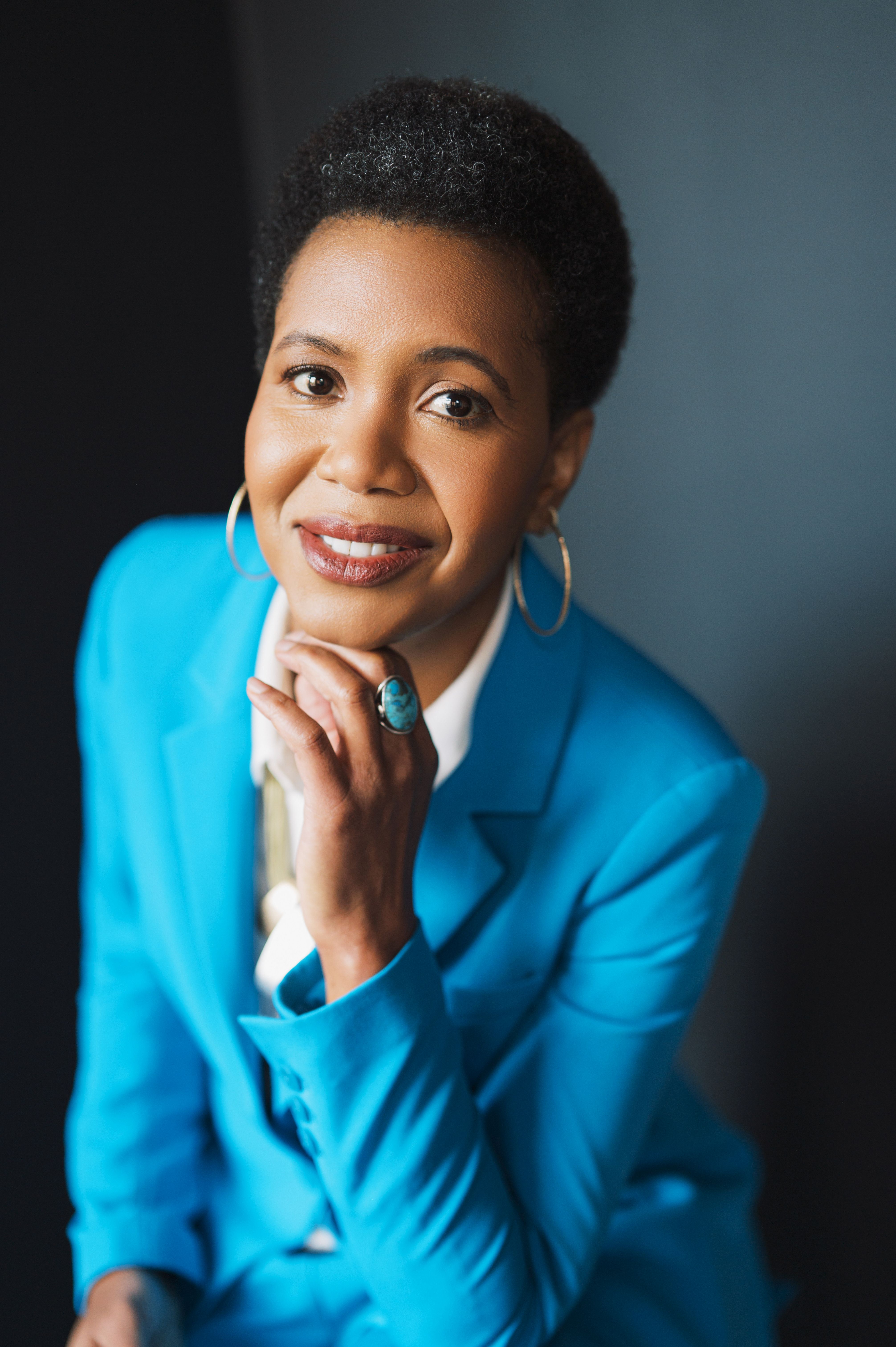
Assistant Professor of Sociology and Urban Studies
Angela Simms is Assistant Professor of Sociology and Urban Studies at Barnard College-Columbia University. She examines the political economy of United States metropolitan areas through the lens of suburban Black middle-class jurisdictions’ capacity to garner sufficient tax revenue for maintaining high-quality public goods and services. In February 2026, she published the book Fighting for a Foothold: How Government and Markets Undermine Black Middle-Class Suburbia.
Prior to academia, Angela served in the federal government for seven years as a Presidential Management Fellow and legislative analyst at the Office of Management and Budget during the George W. Bush and Barack Obama Administrations.
She holds a PhD in sociology from the University of Pennsylvania, a master’s degree in public policy from the University of Texas-Austin, and a bachelor’s degree in government from William and Mary.


